


Customer Support Chatbots
Handle 70-80% of support queries autonomously — password resets, order status, troubleshooting, returns. RAG-powered with human escalation. First-response time drops from hours to seconds.
Production-ready chatbots that understand natural language, retrieve real answers from your data with RAG, and resolve user requests across every channel — not keyword-matching bots that frustrate customers.
Thanks — we've got your details. Pick a time on our scheduler, or we'll email you within one business day to set up your call.
Open the scheduler →50+
AI Specialists
100+
Projects Delivered
5 days
Working POC via APEX
4.9
Clutch Rating
Six chatbot categories covering every conversational AI need, from customer support to omnichannel enterprise deployments.
Handle 70-80% of support queries autonomously — password resets, order status, troubleshooting, returns. RAG-powered with human escalation. First-response time drops from hours to seconds.

Index Confluence, SharePoint, Google Drive, and Slack — give employees instant answers with source citations. Single point of access for policies, docs, and project data.

Engage visitors immediately, ask discovery questions, score leads against your ICP, and route to the right rep. 25-35% higher conversion than static forms. Works 24/7, speaks multiple languages.

Intake forms, symptom pre-assessment, scheduling, medication reminders, post-visit follow-ups. HIPAA-compliant with audit trails and human escalation for clinical sensitivity.

Streamline FNOL, guide claims documentation, provide status updates, answer coverage questions. Document upload, OCR integration, and fraud detection signals built in.

Real-time shipment tracking, delivery rescheduling, exception notifications, and proof of delivery — pulling data from TMS and carrier APIs. Internal chatbots help warehouse teams access SOPs and inventory hands-free.
Tell us the conversation you want to automate and the channels it has to live in — we'll come back with an architecture, scope and fixed-price proposal in 5 business days.
Four generations of chatbots — most production bots today are still stuck in Gen 2 or Gen 3. Knowing where you are tells you what to upgrade and what to keep.
Decision trees and keyword matching. If the user said "refund," the bot returned the refund policy page. No context understanding, no phrasing variations. Every new question required manually adding new rules. These bots still exist — and they're why people distrust chatbots.
Dialogflow and Rasa introduced intent classification and entity extraction. The bot understood "I want my money back" and "how do I get a refund" meant the same thing. Still limited — you had to define every intent manually, and off-script conversations fell apart.
The current production standard. Large language models handle natural conversation, and RAG grounds responses in your actual data. The bot handles questions it's never seen before, as long as the answer exists in your data. According to Gartner, by 2027 chatbots will be the primary service channel for 25% of organizations.
Beyond answering questions — they take actions. An agentic chatbot doesn't just tell you your claim status; it checks three systems, identifies the bottleneck, escalates to the right adjuster, and sends you a confirmation. This is where Softermii's APEX platform gives us a structural advantage.

Real-time data from TMS and carrier APIs. Instant "where is my package" answers thousands of times a day.

Customers reschedule deliveries, request proof of delivery, and manage exceptions through chat.

Delays, damages, and delivery failures auto-trigger customer notifications and corrective actions.

Warehouse teams access procedures, inventory data, and safety protocols hands-free via internal chatbot.
Map every conversation — happy paths, edge cases, failures. Audit support tickets and call transcripts to find what users actually ask.
Structure data for retrieval — chunking, embeddings, vector databases. Consolidate scattered knowledge across 15+ tools into one indexed source.
Select the right LLM, implement RAG pipelines, add hallucination guardrails, configure brand voice. Not everything needs GPT-4 — sometimes a fine-tuned smaller model costs 80% less.
Build for each channel — web widget, mobile SDK, WhatsApp, Slack, Teams, SMS. Integrate CRM, ticketing, calendar, and backend systems with error handling.
Hundreds of real scenarios including adversarial inputs. Content guardrails, escalation rules, multilingual and typo testing. Catches 30-50 failure modes pre-launch.
Full analytics — intent distribution, resolution rates, CSAT scores, latency. Feedback loops fill knowledge gaps and refine quality over time.
 GPT
GPT Claude
 Llama
Llama Mistral
 Rasa
Rasa Dialogflow CX
 Amazon Lex
 LangChain
 Pinecone
 pgvector
 React SDK
 WhatsApp
 Slack
Slack Teams
Teams Node.js
 FastAPI
 ASP.NET Core
 Mixpanel
 Amplitude
 LangSmith
 AWS Bedrock
 Azure OpenAI
 Vertex AI
 HIPAA
HIPAA SOC 2
SOC 2 GDPR
GDPRThat's Softermii APEX: production-ready software for one fixed price, agreed before we start, and you own every line. See the packs and the exact prices.
Both are LLM-powered, both can talk to your users — but they solve different problems. Picking the wrong shape is the cheapest project failure you can buy.
A chatbot waits for a user message and replies — answering questions, retrieving info from your knowledge base, guiding through a workflow. Best for high-volume Q&A, support, intake and lead qualification.
An agent does not wait — it executes multi-step workflows across your systems (intake → assessment → routing → notification) without a human in the loop. Best for rule-heavy processes like claims, KYC, dispatch.
If the workflow you want to automate is less 'answer questions' and more 'execute the whole process end-to-end', the AI Agent track is the right one. Same APEX foundation, different shape.
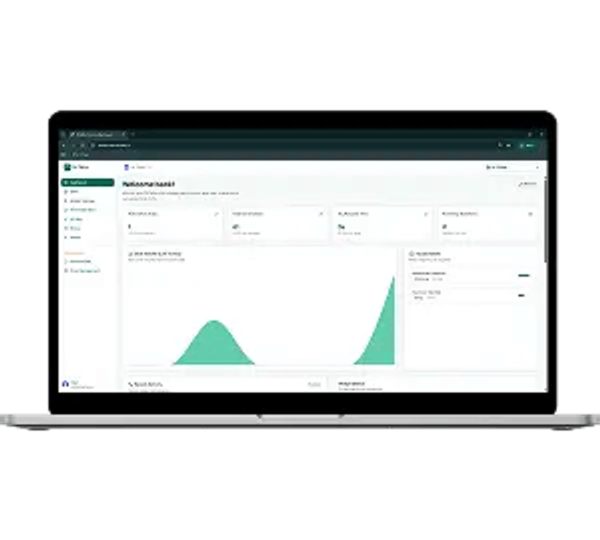
DrTalks, a digital health platform hosting expert medical content, needed a conversational interface to help users navigate thousands of hours of health talks, find practitioners, and get answers — without providing medical advice or crossing clinical boundaries.
An AI-powered chat widget using RAG to retrieve content from DrTalks' library. Understands nuanced health queries, provides sourced responses with links to specific talks and practitioners, and clearly communicates its limitations.
3x
Faster content discovery
+40%
Session duration
8 weeks
React + TS delivery

The biggest mistake companies make with chatbot projects is treating them as an AI problem when they're actually a data problem. The LLM is the easy part — it's a commodity. The hard part is structuring your knowledge base, mapping conversation flows for real user behavior, and building guardrails that handle the 15% of conversations that go sideways. That's where most chatbot projects succeed or fail, and it's where we spend the majority of our engineering effort.
CSO & Co-Founder, Softermii
Andrii Horiachko
Tell us the conversation you want to automate. We will assess feasibility, recommend an architecture, and provide a fixed-scope proposal within 5 business days.
Tell us what you're building. We'll tell you how fast we can ship it — and what it'll cost.
Thanks — we've got your details. Pick a time on our scheduler, or we'll email you within one business day to set up your call.
Open the scheduler →


Have your project done faster with our AI-agent system