


Data Analytics in E-Commerce: Unlocking Business Potential

Want to know more? — Subscribe
Data analytics in e-commerce transforms how businesses operate and interact with their customers. It examines, cleans, transforms, and models data to discover…
Data analytics in e-commerce transforms how businesses operate and interact with their customers. It examines, cleans, transforms, and models data to discover useful information. Companies gain valuable insights into user behavior, preferences, and market trends. They can anticipate customer needs, and respond to market changes proactively.
Data-driven strategies, backed by evidence and analytics, have replaced intuition and guesswork. Small and medium-sized platforms now use big data and advanced tools to offer customers whatever they want at the right time.
With over nine years in e-commerce, Softermii explains the types of data analytics, its key applications, and techniques. Keep reading to discover the features of popular analytics platforms and the challenges you may face when adopting this practice.
Want a skimmable version?
Get a quick overview of our article with AI to access all the important information quickly.
Generate AI SummaryHide summary
Want a skimmable version?
Get a quick overview of our article with AI to access all the important information quickly.
Generate AI SummaryHide summaryHow data analytics unlocks e-commerce potential — the four analytics types, the key applications, and the techniques that power them.
Types of Data Analytics Used in E-Commerce
Data analytics helps businesses to understand market trends, consumer preferences, and operational efficiencies. This section discusses the unique purposes of different types of e-commerce data analytics.
Descriptive Analytics: Understanding What Happened
Descriptive analytics is the foundation of data analysis. It involves processing historical data to understand trends and patterns. Insights into sales trends, customer acquisition rates, and website traffic help examine performance over a specific period. The analysis of past behaviors and outcomes helps businesses understand patterns and trends. This data is often critical for strategic planning and operational adjustments.
Project Calculator
Get the detailed project estatimation – choose the details of your product and calculate the quote of the development
Calculate nowPredictive Analytics: Anticipating Future Outcomes
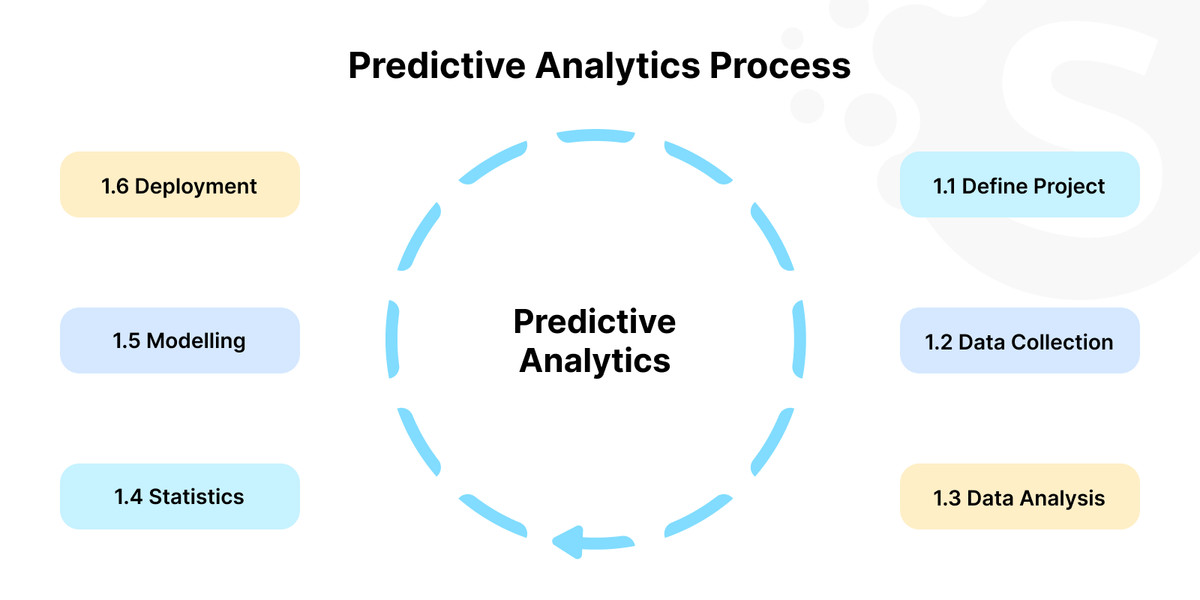
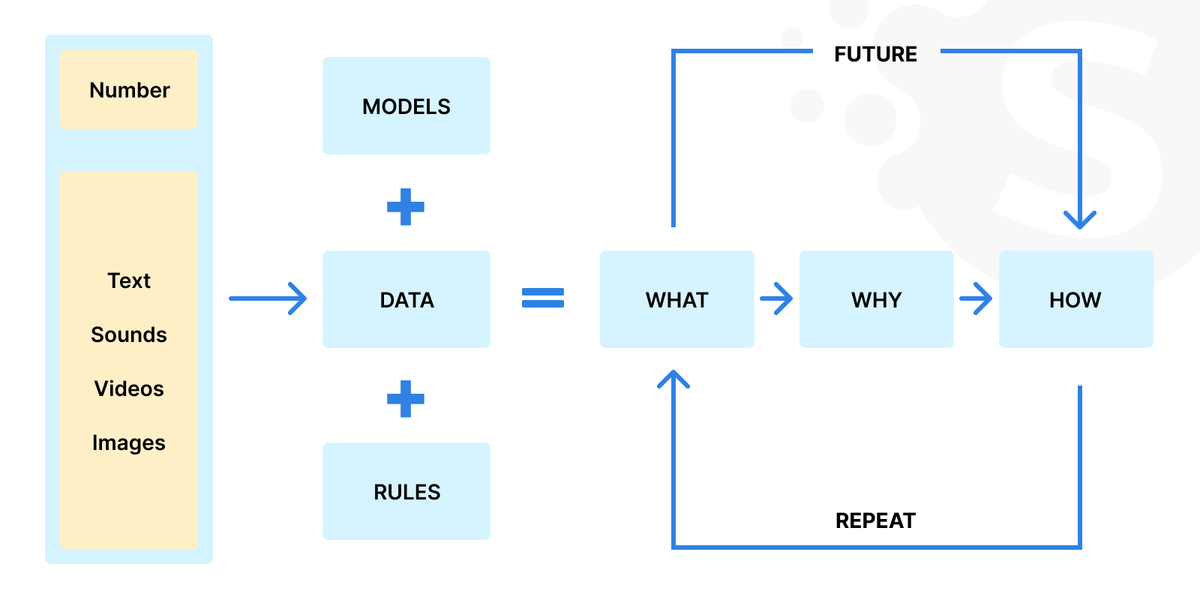
Predictive analytics uses statistical models and ML algorithms to forecast future events. In e-commerce, it can include predicting customer behavior, sales trends, and inventory needs. This foresight enables businesses to make proactive decisions. For instance, they can adjust marketing strategies or prepare for demand fluctuations, enhancing customer satisfaction and improving operational efficiency.
Prescriptive Analytics: Recommending Specific Actions Based on Data
Prescriptive analytics predicts future trends and suggests actions to achieve desired outcomes. It combines insights from descriptive and predictive analytics with decision-making algorithms. For instance, it can suggest the best marketing approach for a target demographic or the optimal pricingstrategy for a product. Prescriptive analytics recommends specific strategies that lead to increased business efficiency and profitability.
Behavioral Analytics: Analyzing Customer Behavior and Patterns
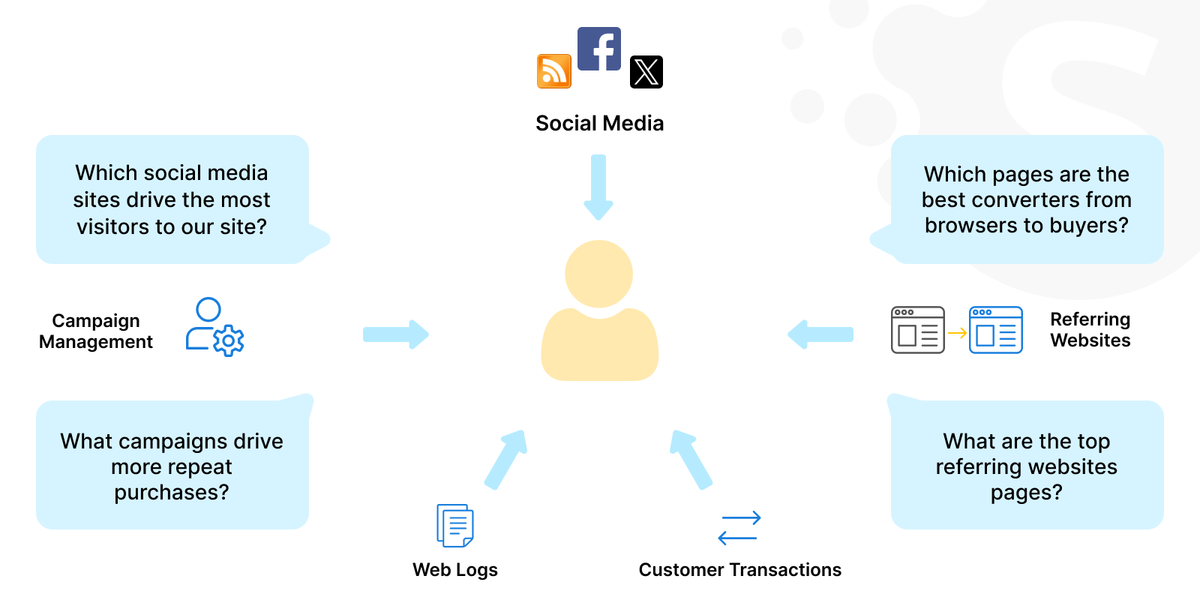
Behavioral analytics focuses on understanding how customers interact with an e-commerce platform. It tracks user journeys and analyzes buying habits to understand the purchasing factors. The customer interactions and feedback analysis allow more tailored offerings and user experience. This way, companies better meet the needs of their clientele, leading to increased customer engagement and loyalty.
Key Applications of Data Analytics in E-Commerce
Most strategies and operations in e-commerce rely on advanced data analytics. Companies can enhance the way they interact with customers and manage internal processes. This part of the article outlines how big data analytics in e-commerce contribute to more responsive and customer-centric business models.
Customer Segmentation and Targeting
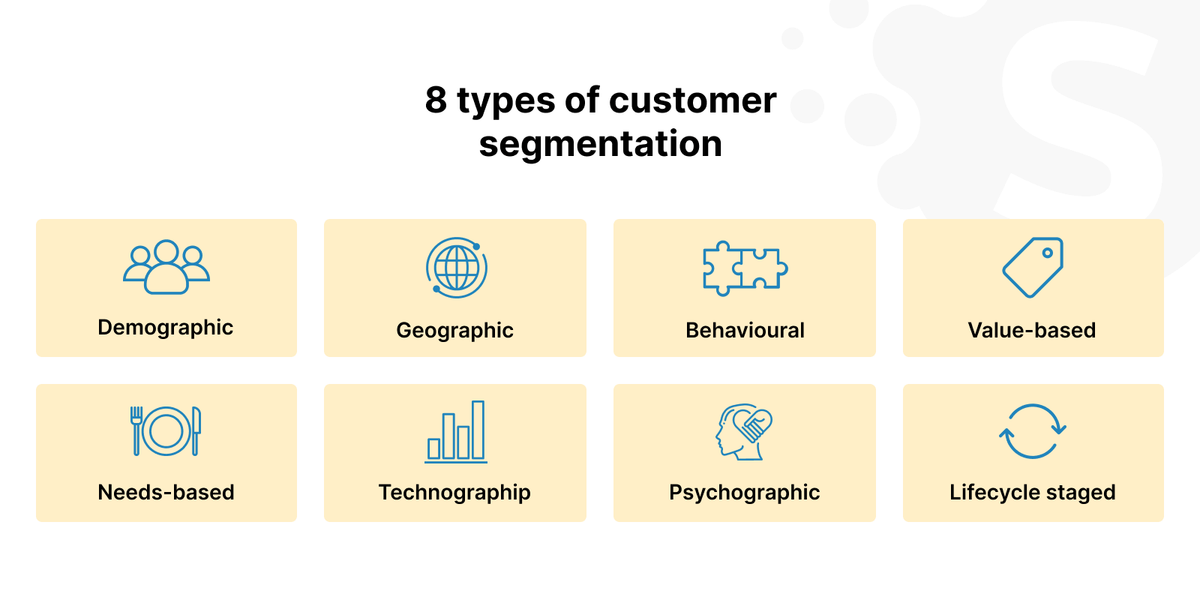
Data analytics enables businesses to dissect and understand vast amounts of customer data. Businesses can segment their customer base into distinct groups by analyzing demographics, purchase history, and online behavior. This segmentation is essential for developing targeted marketing strategies and improving customer engagement.
Using customer data insights, e-commerce platforms can create personalized marketing campaigns. Such customized strategies deliver relevant content and offers, increasing conversion rates and customer loyalty.
Product Recommendations and Upselling
Companies can suggest products that align with the customer's interests by analyzing purchase history and browsing behavior. This approach enhances the shoppingexperience, increasing the likelihood of additional purchases.
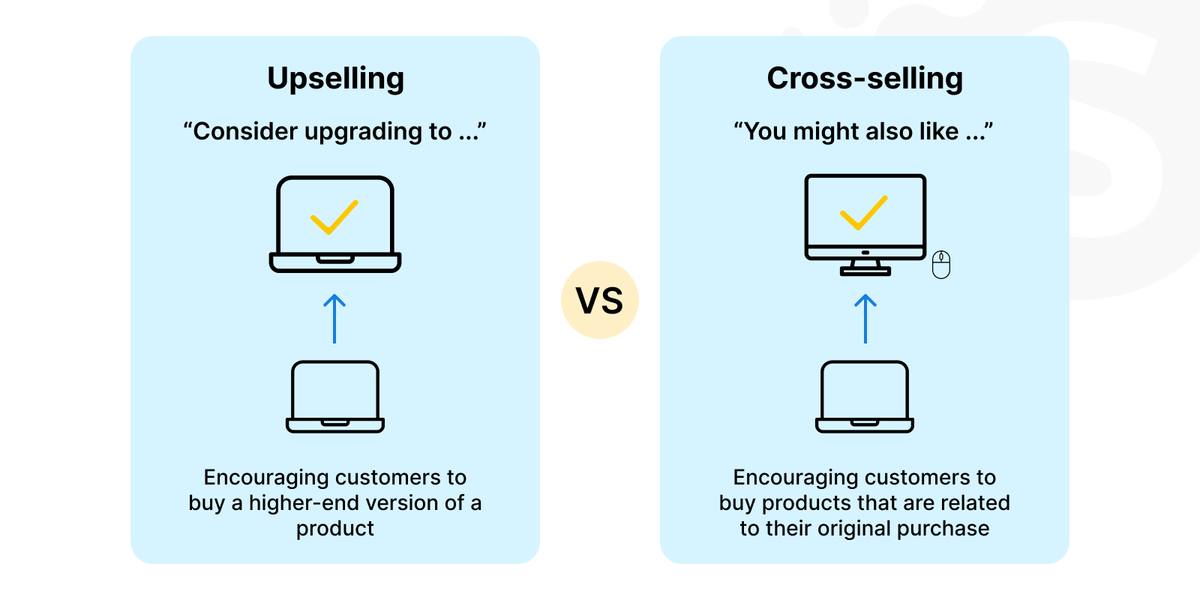
Data analytics helps in identifying cross-selling and upselling opportunities by analyzing customer preferences. Businesses can suggest relevant or expensive products, increasing the average order value. Thus, customers can discover products that might have slipped under their radar.
Inventory Management and Demand Forecasting
Analyzing past sales trends and customer buying patterns helps predict future demand. This information is crucial for inventory management in e-commerce companies. It ensures that popular products are adequately stocked.
Effective inventory management can reduce the costs associated with overstocking and prevent revenue loss from stockouts. Maintaining optimal stock levels enhances businesses' operations and provides better service.
Pricing Optimization
E-commerce data analytics software analyzes competitor pricing and market trends. This way, it provides insights into the most effective pricing strategies. Understanding how price changes affect demand and sales enables businesses to set competitive and profitable prices.
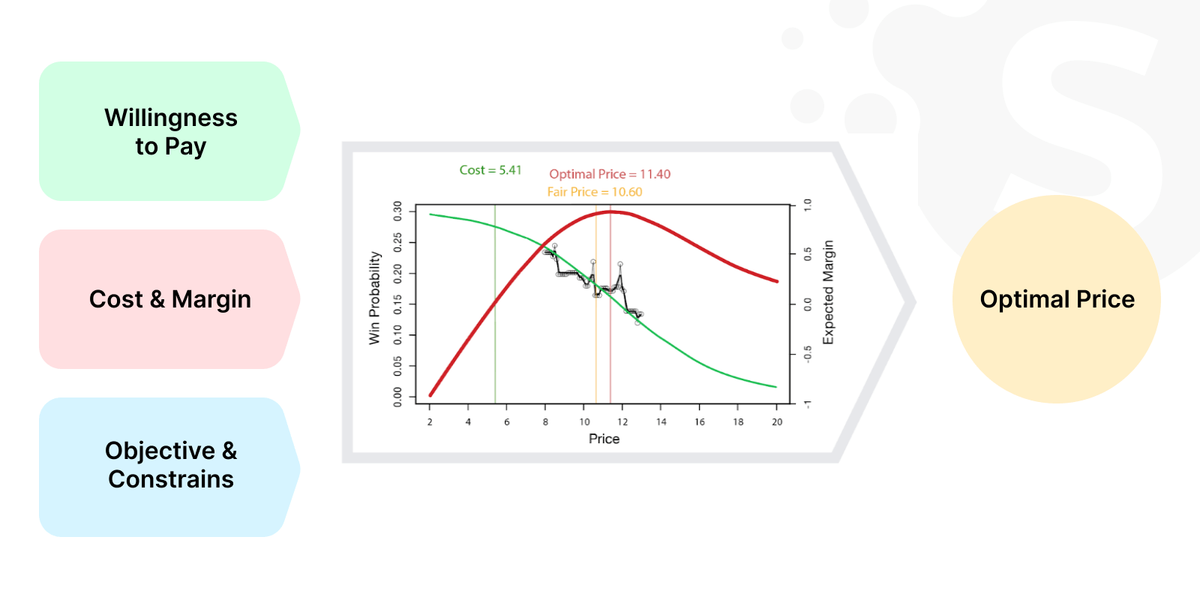
Nowadays, e-commerce platforms are increasingly adopting dynamic pricing. The real-time cost adjustments are often based on market conditions, demand, and other factors. This strategy ensures competitiveness and can lead to increased revenue and margins.
Techniques for E-Commerce Data Analytics
Data analytics techniques play a pivotal role in decision-making and strategy formulation. Below, we delve into some key techniques employed in e-commerce and data analytics.
Data Collection and Storage
The foundation of effective data analytics lies in collecting the right kind of data. For e-commerce, this includes customer behavior data, transaction records, product performance data, and more. Collecting relevant data allows for insights that drive strategic decision-making and operational improvements.
Businesses are turning to cloud-based solutions and data warehouses to manage the vast amounts of generated data. These platforms offer scalable and secure services for storing and processing large data sets, helping with data management, accessibility, and integration.
Data Visualization and Reporting
After the data is collected and stored, it is crucial to present it in an accessible and understandable format. Data visualization can "translate" complex data sets into understandable and actionable insights. With charts, graphs, and interactive dashboards, e-commerce businesses can better recognize trends, patterns, and anomalies within their data. These graphical formats make it easier for stakeholders to grasp the nuances of data and aid in effective decision-making.
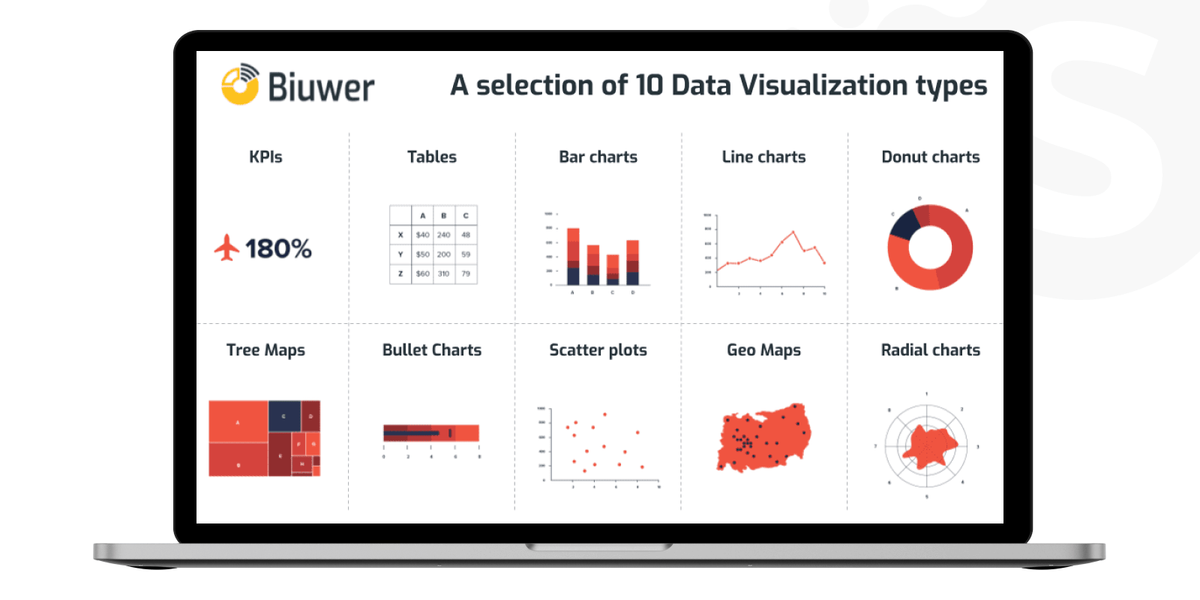
Beyond visual representations, comprehensive reporting is also vital for detailed analysis. These reports summarize findings, highlight key metrics, and provide actionable insights. Thus, businesses get a thorough view of their performance, customer behavior, and market trends. Well-structured reports serve as a basis for strategic planning and operational adjustments.
Machine Learning and AI
Machine learning algorithms are proficient at analyzing historical data to predict future trends and customer behaviors. By employing them, e-commerce businesses can foresee market demands and customer preferences. They can understand the potential risks and make proactive strategy adjustments.
AI also plays a crucial role in automating various e-commerce processes, from personalized product recommendations to optimized search functions. These technologies enhance operational efficiency and customer experience. They provide a more tailored and responsive interaction with the platform. Build a data analytics team to effectively allocate resources and focus on strategic initiatives.
Overview of Popular Analytics Platforms for E-Commerce
For e-commerce companies, leveraging the right analytics platform can be a game-changer. These services offer diverse functionalities, from basic visitor tracking to advanced predictive analytics. Here, we've highlighted their unique attributes and how they contribute to the success of e-commerce processes.
Google Analytics
Google Analytics is one of the most widely used analytics tools in the digital world. It offers seamless integration with Google services like AdWords and Search Console. This way, businesses can see how marketing efforts translate into website traffic and conversions.
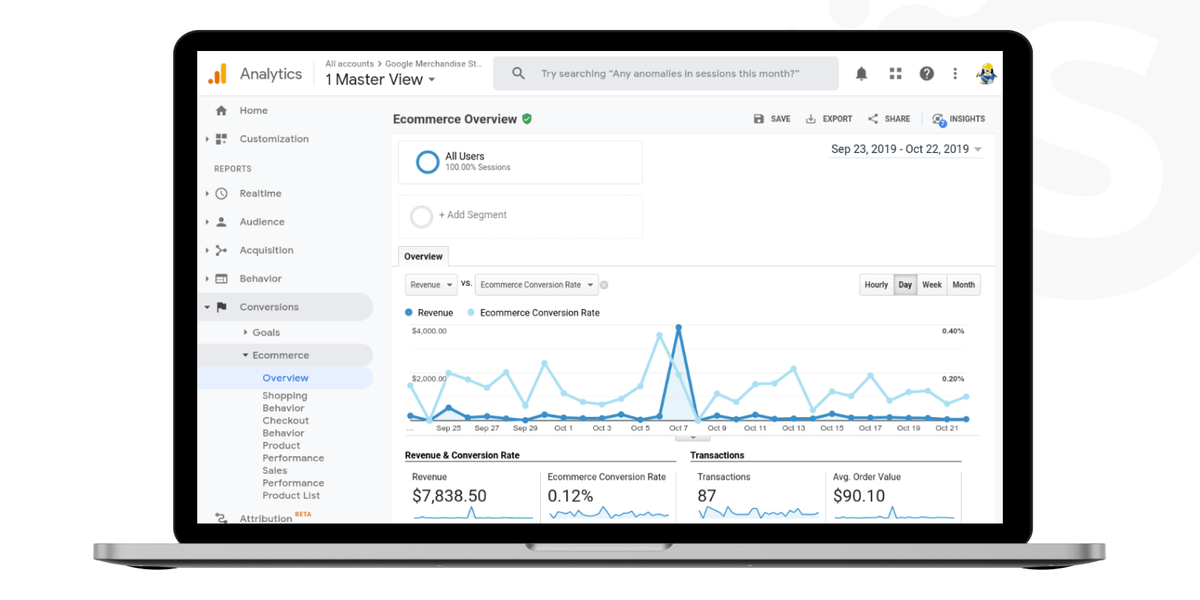
The platform provides detailed insights into user behavior throughout the shopping process. It often includes product views, cart additions, and checkout behavior.
Google Analytics also excels in audience analysis. Businesses can segment users based on demographics, behavior, and device usage. Its real-time data tracking is crucial for immediate performance assessment and decision-making.
Adobe Analytics
Adobe Analytics stands out for its highly customizable reporting capabilities. Companies can create complex, tailored reports that suit their specific needs. The integration of data across various channels allows for a complete view of the customer experience.
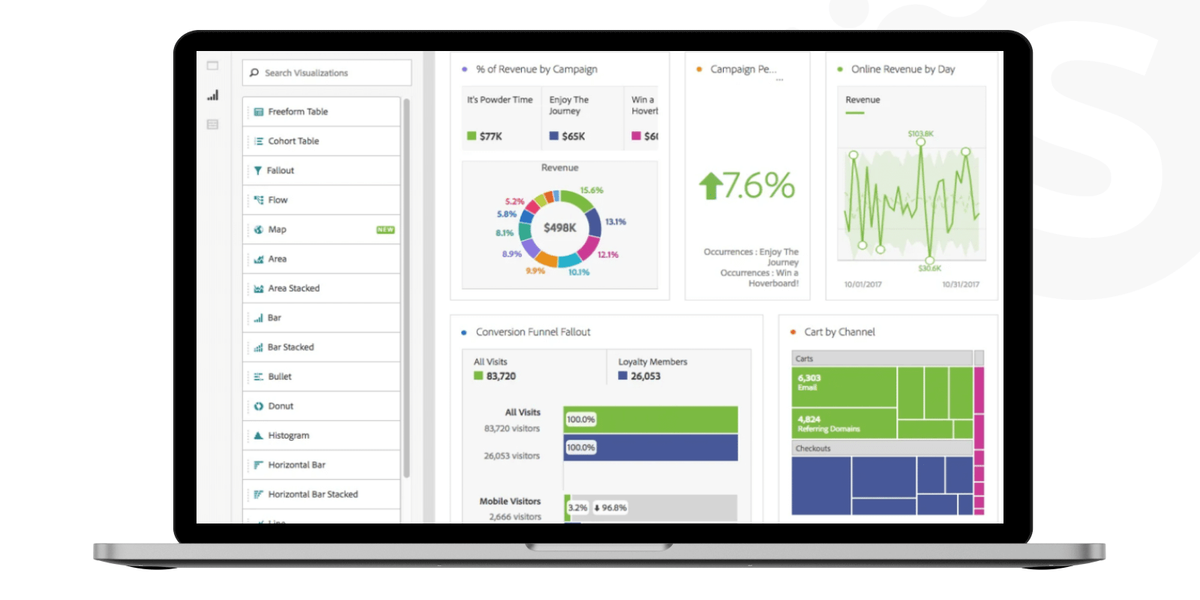
The service also offers sophisticated segmentation tools and real-time data processing. It leverages AI and machine learning through its Adobe Sensei platform. These functionalities can offer predictive insights and automated anomaly detection.
Shopify's Built-In Analytics
Shopify Analytics is a go-to tool for businesses operating on the Shopify platform. It provides essential insights into sales data, customer behavior, and store performance.
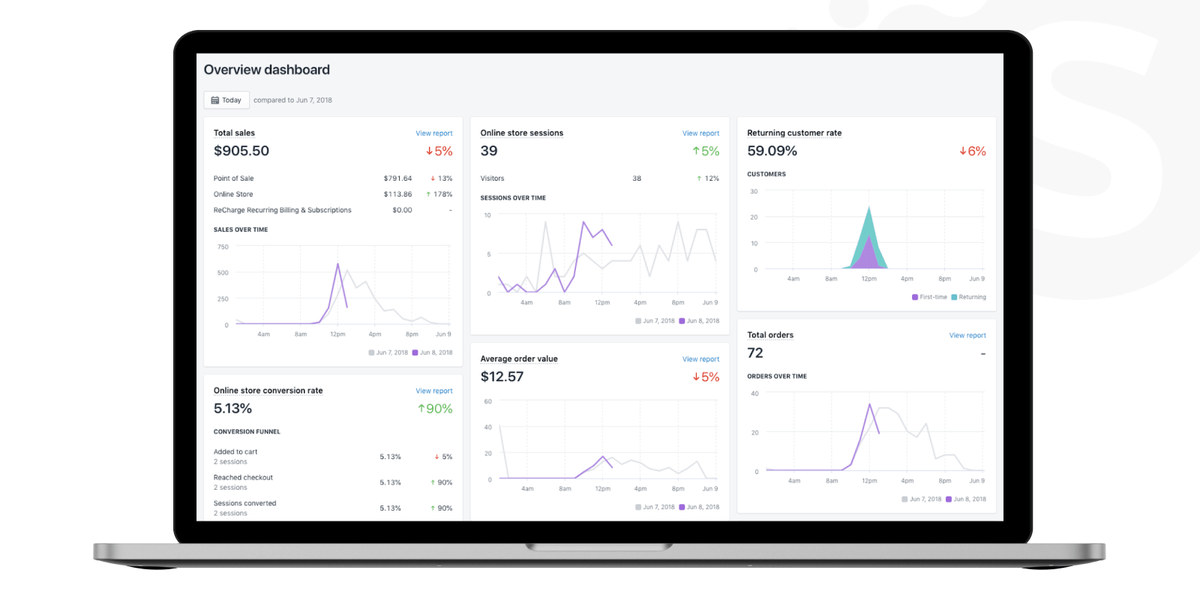
Shopify Analytics is designed for easy use, offering a straightforward and intuitive interface. This way, it is accessible to businesses of all sizes, especially small to medium-sized enterprises.
Glew.io
Glew is particularly useful for multi-channel and multi-platform businesses. It can aggregate data from e-commerce platforms, marketing channels, and CRM systems. This integration provides a holistic view of business performance. With advanced reporting capabilities, businesses can create custom reports and dashboards.
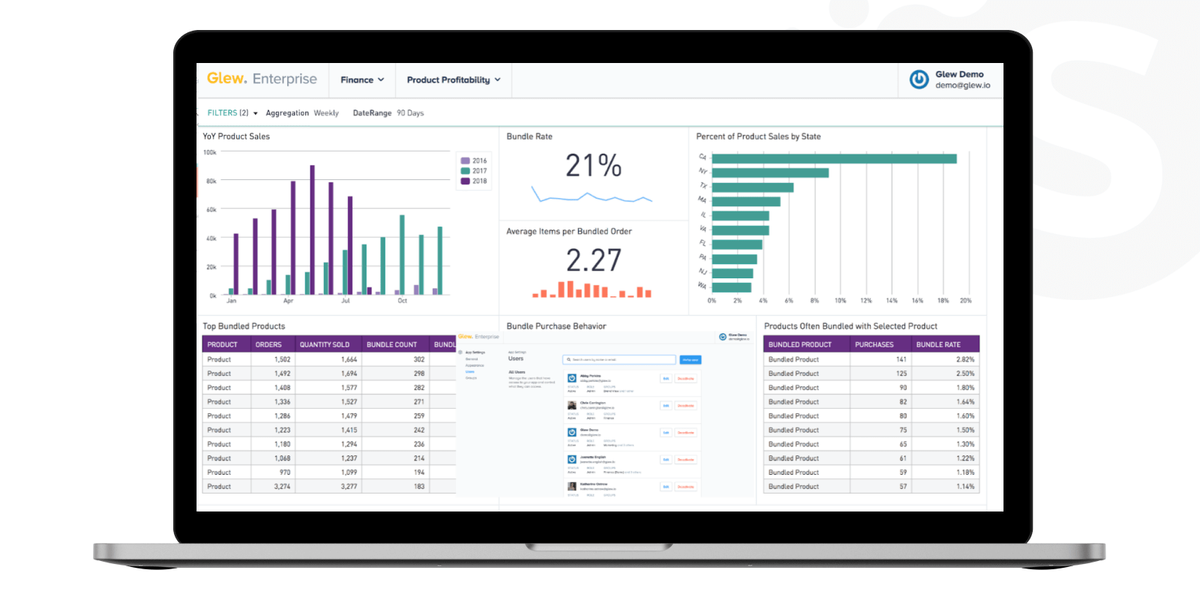
The platform also analyzes marketing campaign performance and customer lifecycle metrics. It helps in the development of targeted marketing strategies and customer retention efforts.
Woopra
Woopra's main focus is on tracking the customer journey across multiple touchpoints. The platform provides instant insights into users' actions and interactions. Companies can customize their analytics dashboard to focus on the metrics that matter most to their business.
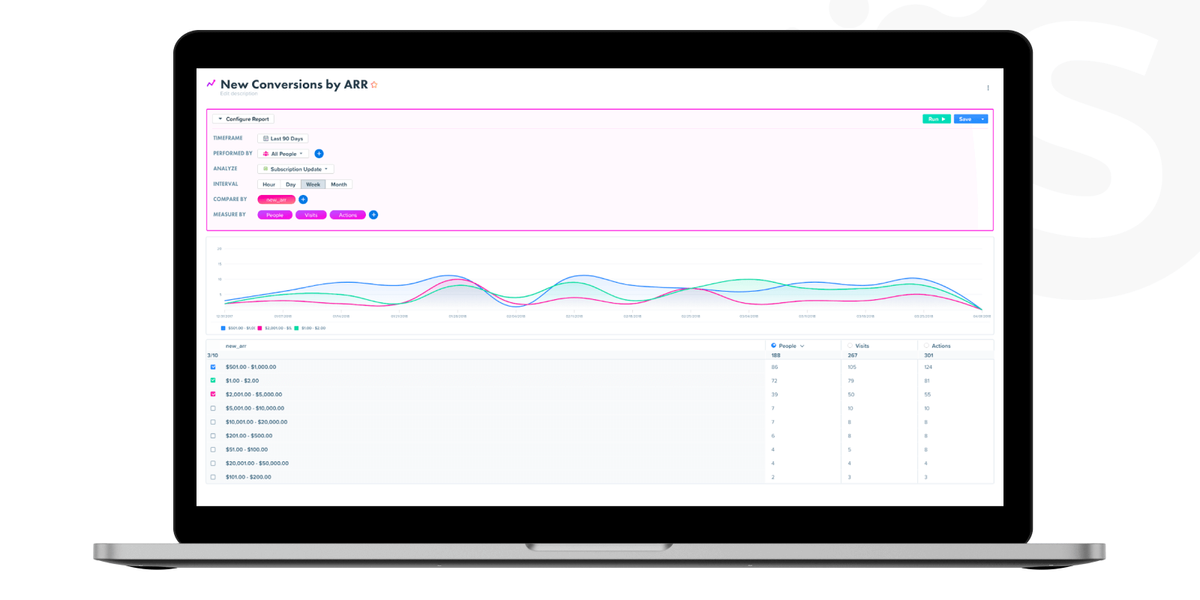
A unique feature of Woopra is its ability to automate actions based on data triggers. For instance, if a customer abandons a cart, Woopra can trigger an automated email to them.
Overcoming Challenges in Data Analytics for E-Commerce
Several challenges must be addressed to guarantee data's effective and ethical use. Let's discuss the primary concerns and strategies to overcome them.
Ensuring Data Accuracy and Integrity
Maintaining the accuracy and integrity of data is fundamental for reliable analytics. Inaccurate data can lead to misguided decisions that may negatively affect business outcomes. E-commerce businesses must employ robust data cleaning and validation techniques:
- removing or correcting erroneous data;
- deduplicating records;
- handling missing values.
This way, they can ensure that the data collected is accurate and relevant. Employing automated tools and algorithms can streamline this process. Even so, it should be complemented with manual checks to ensure the highest data quality.
Regular audits and checks ensure that the data remains accurate and consistent over time. Automated monitoring tools can detect and alert teams about data quality issues.
84%
According to the VentureBeat report , predictive analytics is used by 84% of marketing leaders
Data Privacy and Security
With the rise of stringent regulations, businesses must prioritize the safety of customer data. Regulations like GDPR and similar laws worldwide allow businesses to be vigilant in complying with data privacy laws. Companies must:
- obtain proper consent for data collection;
- ensure data is used for its intended purpose;
- provide customers with access to their data.
Staying updated with legal requirements and adjusting data practices is imperative.
Companies should implement strong cybersecurity measures to protect data from breaches, such as encryption and secure access controls. Regular security audits and employee training on best practices in data analytics are also vital. Establishing clear data handling policies and procedures ensures that all employees adhere to data security guidelines.
Conclusion
In this article, we have explored the multifaceted role of e-commerce and data analytics. This is a powerful tool that helps to understand market dynamics and predict consumer behavior. By making informed decisions, businesses pave the way for growth and success.
Discover how data analytics enables businesses to anticipate and shape market changes with Softermii. This proactive approach distinguishes leading e-commerce companies in a highly competitive digital marketplace. Our experts are here to guide those ready to transform their e-commerce operations.
Contact our team to redefine the possibilities of e-commerce. Embrace the future with confidence, backed by the power of data analytics.
Gain valuable insights into user behavior, anticipate customer needs, and respond to market changes implementing data analytics in your e-commerce solution
Frequently Asked Questions
How can data analytics optimize supply chain operations in e-commerce?
Data analytics can forecast demand, optimize inventory levels, and identify efficient delivery routes. Businesses can predict inventory needs by analyzing sales trends, customer preferences, and seasonal variations, reducing overstock and stockouts. Additionally, analytics can streamline logistics, ensuring timely delivery and cost savings.
How does data analytics help improve customer experiences?
By analyzing customer data, businesses tailor their offerings and create personalized marketing campaigns. This personalization increases customer satisfaction, loyalty, and higher conversion rates.
What are the key concepts in e-commerce analytics?
The key concepts in e-commerce analytics include:
Understanding them helps businesses to target their marketing on social media and improve business strategies effectively.
What is the most popular e-commerce analytics tool?
Google Analytics is often considered the most popular e-commerce analytics tool. It offers comprehensive features, ease of integration, and no cost for basic use. This platform provides in-depth insights into website traffic, customer behavior, and conversion metrics. Its wide range of functionalities is suitable for businesses of all sizes.
How can small e-commerce businesses benefit from data analytics?
Small e-commerce businesses can benefit from data analytics by:
Even basic analytics can provide valuable information on customer preferences and market trends. Companies can gradually adopt more advanced techniques to enhance decision-making and customer experiences as they grow.
How about to rate this article?
0 ratings • Avg 0 / 5 · Thanks for rating!
Written by:

CEO & Co-Founder
Slava Vaniukov is the CEO and Co-Founder of Softermii, with more than 10 years on the front lines of software development. He has spent that decade helping founders and enterprises turn ambitious ideas into products that ship — and that perform. Apps built by his teams have been featured on multiple “Top 10 Best App…