


Want to know more? — Subscribe
Epic EHR integration allows for real-time, consolidated access to patient health data. This platform has transformed how healthcare is managed and delivered in…
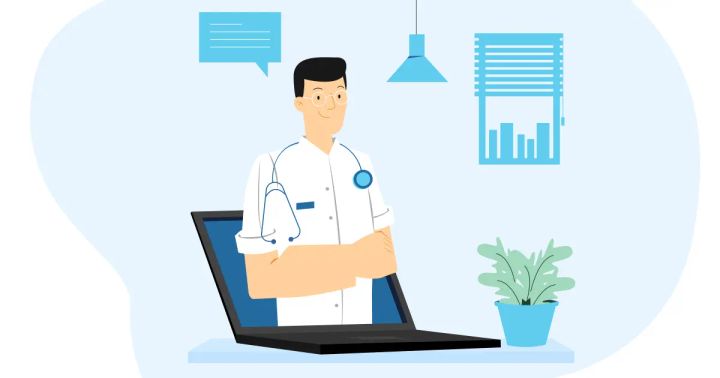
Epic EHR integration allows for real-time, consolidated access to patient health data. This platform has transformed how healthcare is managed and delivered in many clinics.
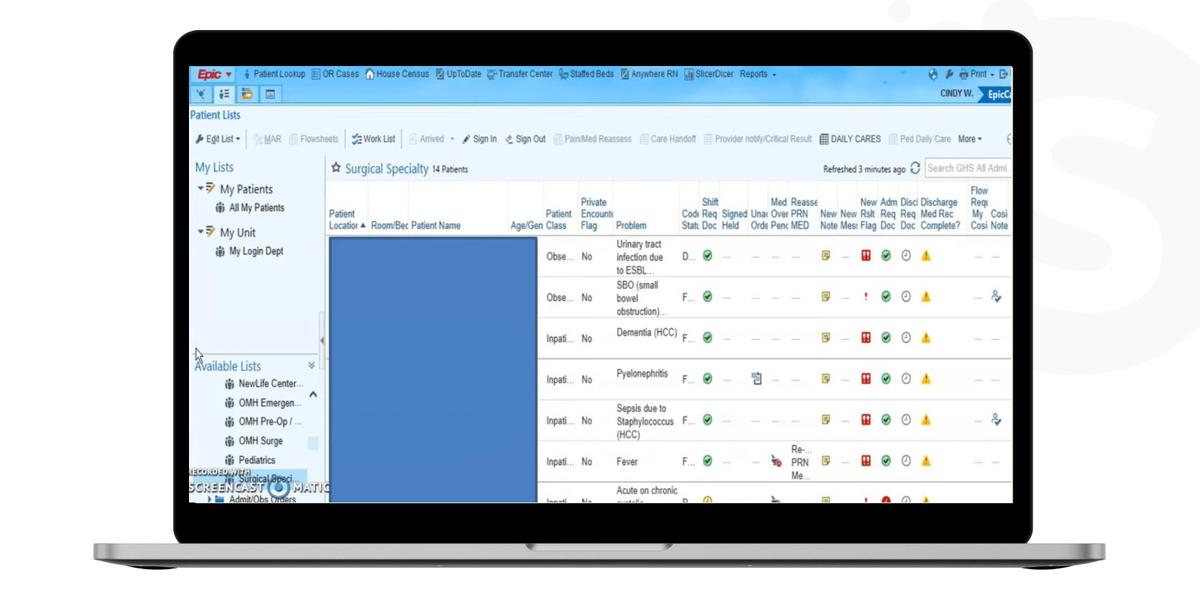
Epic EHR consolidates medical histories, treatment plans, and diagnostic results, enhancing the accuracy of diagnoses and treatments. Epic EMR/EHR amplifies patient involvement by granting them access to their health data. It promotes informed and active participation in their care journey.
Softermii has been a trusted partner in enhancing patient care at numerous healthcare facilities for over nine years. This article explains the details of Epic EHR implementation. You'll gain insights into the platform's advantages, best practices, the integration procedure, and expected investments.
Want a skimmable version?
Get a quick overview of our article with AI to access all the important information quickly.
Generate AI SummaryHide summary
Want a skimmable version?
Get a quick overview of our article with AI to access all the important information quickly.
Generate AI SummaryHide summaryA comprehensive guide to Epic EMR/EHR integration — why to integrate, the five-stage process, and the best practices that make it succeed.
Why Integrate with Epic EHR
Epic EHR is one of the industry leaders in healthcare technology. Its integration offers the best technological tools for providers and their patients. But why should businesses, especially healthcare organizations, integrate with Epic EHR? Here are compelling reasons:
Enhancing Patient Care and Experience
At the core of healthcare is the patient. Platform with an Epic EHR ensures patientdata is accurate, up-to-date, and easily accessible. This system leads to more accurate diagnoses, targeted treatments, and better patient outcomes.
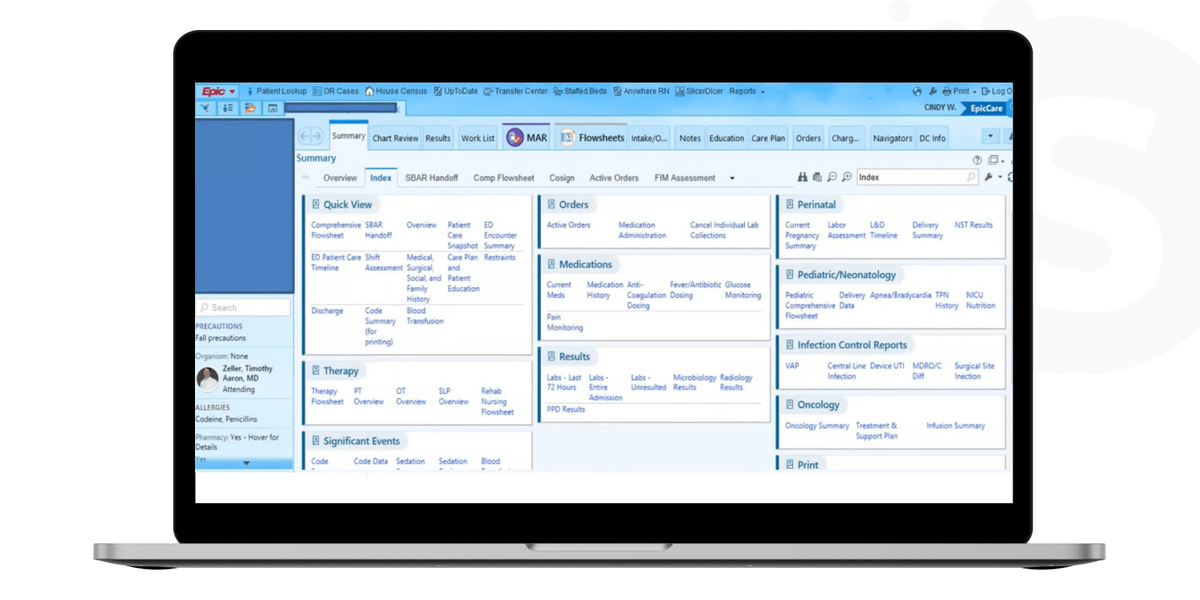
Patients can also access their medicalrecords, schedule appointments, and communicate with providers. Being engaged and proactive in the healthcare journey becomes easier.
Streamlining Clinical Processes
EHR integration reduces manual tasks, reduces errors, and optimizes clinical workflows. For example, prescription orders can be sent to pharmacies, and lab results can be viewed in real time, all within the same platform. This systematization allows physicians to focus on their patients and their treatments.
Interoperability Across Healthcare Networks
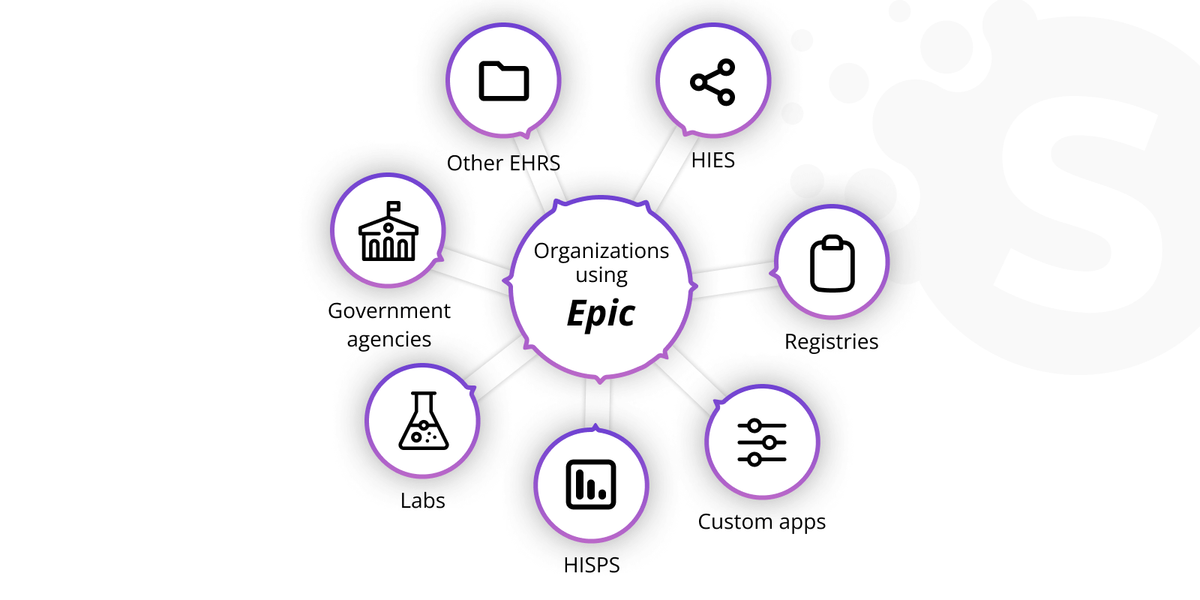
With patients seeing different specialists, labs, and hospitals, the ability of these systems to communicate is crucial. Epic EHR's emphasis on interoperability ensures that data is consistent and transferable across networks. It eliminates information silos and fosters a more collaborative care environment.
Data-Driven Decisions
Epic EHR analytics and reporting tools help providers to analyze trends and measure outcomes. Hospitals can identify the best practices, cost-saving opportunities, and areas for improvement.
Regulatory Compliance and Security
Patientdata is sensitive, so its security is paramount. Epic USCDI on FHIR ensures that patient information is safeguarded against breaches. Furthermore, its features can help providers ensure they are compliant with regulations.
Steps to Integrate Epic EHR
A smooth integration of Epic EHR API can elevate the functionality of a healthcareapp. Yet, it's important to understand the main stages of this process to make the most out of the digital infrastructure. We've collected the five primary phases involved in Epic EHR integration:
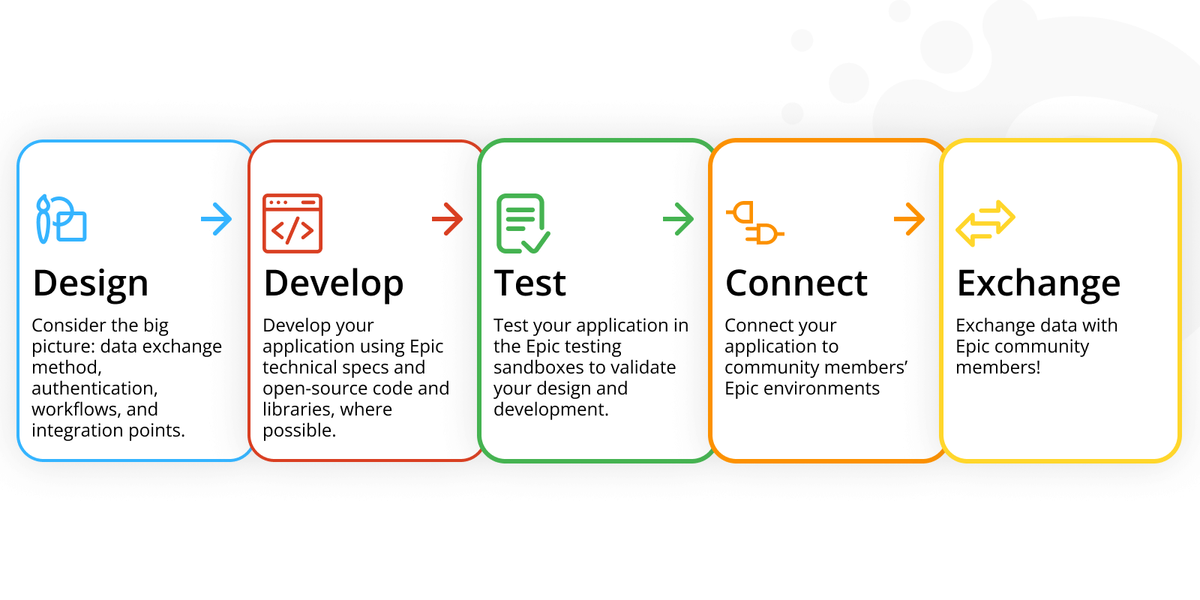
Design Stage
The focus here is to outline the specific types of data the application will handle. It's essential to set clear boundaries for the depth of details needed within these data sets. Clarity in this phase ensures that the next steps are tailored to your facility's specific needs.
Development Stage
After a clear blueprint, it's time to start the development. The API key will serve as your passport to the world of Epic EHR. Testing all endpoints using REST clients to guarantee the desired functionality is essential. This step ensures that the core functionalities align with the design.
Testing Stage
After the development, checking the integration under real-world scenarios is imperative. The testing phase should be comprehensive and evaluate every aspect of the integration. It must ensure no glitches, data mismatches, or other issues. Any discrepancies must be fixed, assuring final functionality aligns with the intended outcomes.
Connecting Stage
With the testing phase complete, it's time to make it live within your application. This step includes incorporating API calls with relevant endpoints into your app's infrastructure. Now, the designed plans transform into concrete functionalities within your application. Thus, your application begins to interact with Epic EHR actively.
Implementing Stage
At this point, the integration becomes a part of your clinic's digital ecosystem. Though it may seem like previous stages, this phase involves deploying the integration on a broader scale, ensuring smooth real-time operation. After the final tests and adjustments, you can harness the power and benefits of the Epic EHR system.
Project Calculator
Get the detailed project estatimation – choose the details of your product and calculate the quote of the development
Calculate nowTechnical Documentation
It provides code examples and specifications to help with future updates and troubleshooting.
Best Practices for Epic EHR Integration
Integration of Epic EHR is a transformative step for healthcare institutions. For a smooth process and beneficial outcomes, following some best practices is vital. They streamline the integration and optimize the long-term performance and security of the system.
Adopting a Phased Approach
Epic EHR integration can be overwhelming and fraught with challenges. Adopting a step-by-step approach is wiser, beginning with smaller data sets or functionalities. It allows for thorough testing and debugging at each stage. This technique ensures that potential issues are isolated and addressed without affecting the entire system.
Ensuring Data Security and Privacy
Patientdata is both sensitive and valuable. It's crucial to ensure that all data transfers, storage, and access points are secure. Employ encryption protocols, two-factor authentication, and regular security audits to safeguard against breaches. Compliance with HIPAA regulations ensures patient information remains confidential and secure.
Regular Monitoring and Maintenance
Integration is not a one-time task. Regular system monitoring is essential to detect and address any potential issues. Scheduled maintenance scans the system's performance and ensures it remains updated with the newest security patches.
Collaboration and Communication
Integration affects most healthcare departments, from IT to clinical teams. Foster open communication between the staff to ensure everyone is on the same page. The collective effort leads to quicker problem-solving and the sharing of valuable insights.
$ 9.1 Billion by 2023
Based on the most recent industry analysis by Future Market Insights, the USA Electronic Health Records (EHR) Market is projected to hit $ 9.1 Billion by 2023
Training and Education
An Epic EHR system is only beneficial if every user understands its functionalities. Invest in comprehensive training programs and workshops for staff to ensure they are familiar with the system. Remember to update these training modules to keep pace with system updates.
Feedback Loop
Encourage end-users (doctors, nurses, administrative staff) to provide feedback about the system functionality. Their experience can offer invaluable insights to refine and enhance the integration.
Optimizing for Interoperability
While Epic EHR is a comprehensive system, healthcare institutions often use several platforms. Epic EHR must be interoperable with other systems to enhance its utility and efficiency.
Flexible Architecture
Healthcare is an ever-evolving field. With a flexible architecture, it's easier to accommodate future changes or expansions without significant overhauls. This practice will save time and resources for your facility in the long run.
Maintaining Data Integrity
While data exchange, it's crucial to ensure no data loss or corruption. Implement validation checks to maintain the integrity of patient and other critical data.
Benefits of Successful Integration with Epic EHR
Integrating with Epic EHR for timely and accurate information can make a pivotal difference in healthcare. But what exactly makes a successful integration with Epic EHR so impactful? Here are some of the primary advantages.
Enhanced Patient Care Coordination
One of the most significant challenges in healthcare is ensuring that different care providers consistently understand a patient's health. All doctors involved in a patient's care can access the same up-to-date information. The Epic EHR integration facilitates better coordination and more informed decision-making.
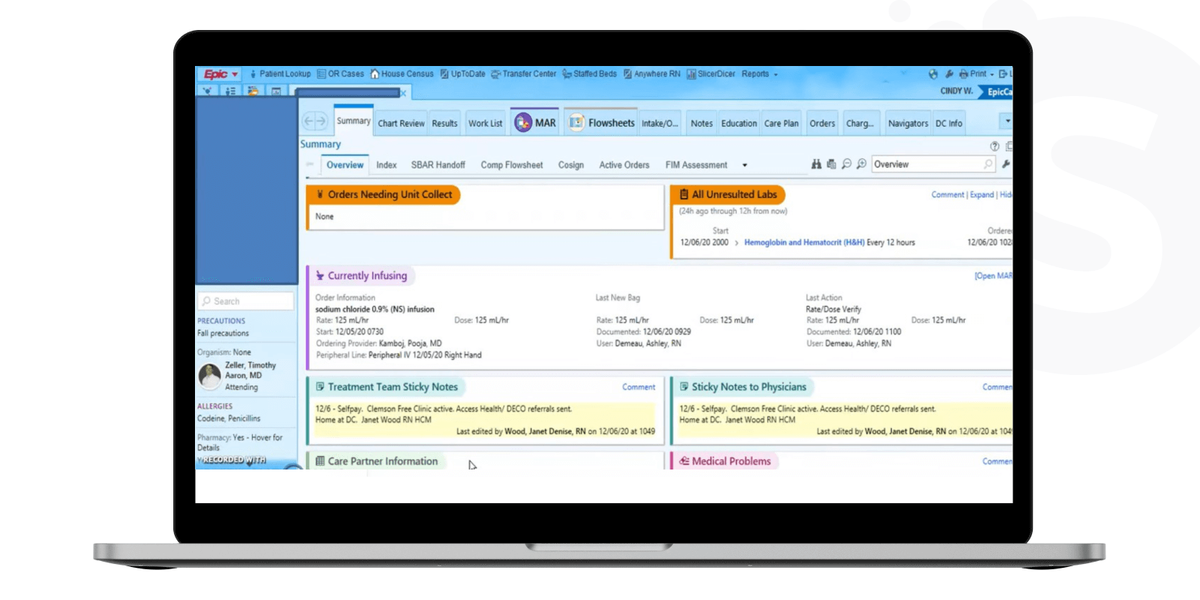
Real-time Access to Health Data
In emergencies, every second counts. Epic EHR API provides immediate access to patienthealth records. Providers can review medical history, medications, allergies, and lab results. This immediacy aids in faster diagnosis and reduces the risk of medical errors. It also ensures that providers always have the most recent and relevant information.
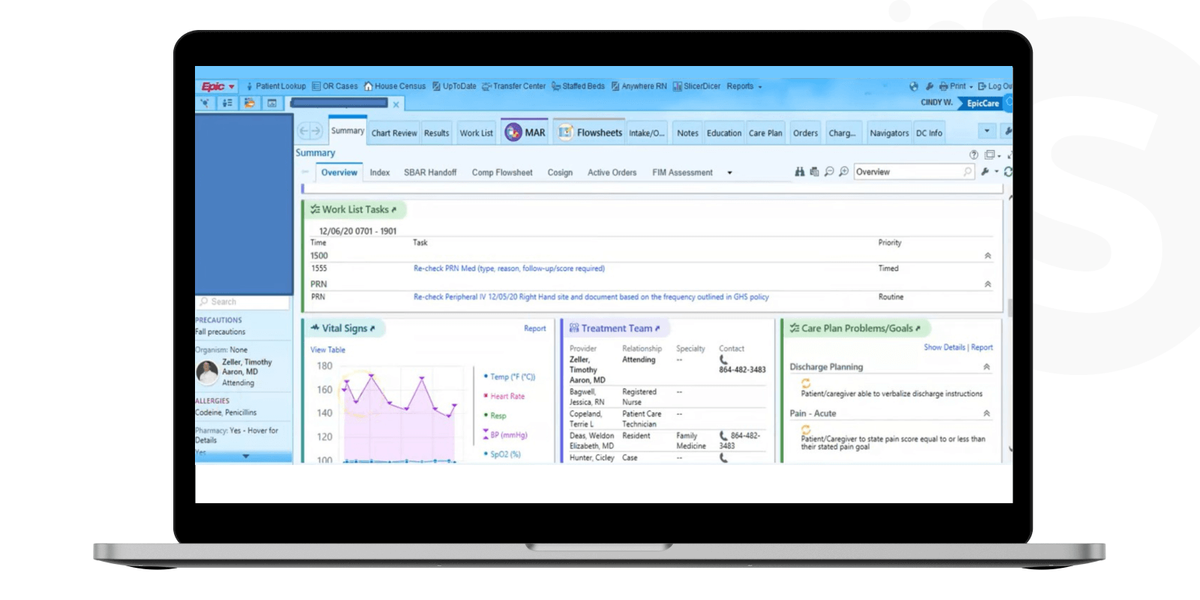
Efficient Resource Utilization
An integrated Epic EHR system helps healthcare facilities streamline their processes. Automated workflows and digital resource tracking lead to significant time and cost savings. Institutions can forecast resource needs by identifying trends, leading to more strategic planning.
Streamlined Administrative Tasks
With an EHR system, billing, scheduling, and patient record maintenance become more streamlined. It allows staff to focus on more pressing matters and improves operational efficiency.
Improved Patient Engagement
A vital benefit of integrating with Epic EHR is that it's not only the healthcare providers who gain; patients do, too. They can access their medical histories, schedule appointments, and communicate with their providers. This empowerment fosters an active role in health management, enhancing their overall care experience.
Reduced Redundancies
With a centralized system, there's a significant reduction in repetitive tests and procedures. If a patient has undergone a particular test at one facility, the results are available to providers at another.
Data-driven Decision Making
The analytical capabilities of Epic EHR allow institutions to derive actionable insights from the data they generate. The software can identify at-risk populations and track the effectiveness of treatment protocols. Such data-driven decisions can lead to more informed strategies and better patient outcomes.
Regulatory Compliance
With changing healthcare regulations, maintaining compliance can be challenging. An integrated Epic EHR system adheres to industry standards and regulations. It ensures that healthcare providers remain compliant while focusing on patient care.
The Cost Aspect of Epic EHR Integration
Like any significant initiative, Epic EHR integration comes with associated costs. Understanding its financial side is pivotal for institutions to make an informed decision. This section delves into the cost considerations of EHR integration.
Investment Breakdown
- Licensing Fees. Acquiring the necessary licenses for Epic EHR is one of the primary expenses. The cost depends on the scale of the healthcare institution and the specific modules chosen.
- Implementation Costs. They include expenses for setting up the system, migrating data, and any specific customizations.
- Training Expenditures. You must provide thorough training for staff to use the system proficiently. Get ready for expenses for workshops, course materials, and on-site trainers.
- Maintenance and Upgrades. You need to allocate funds to cover regular system updates and maintenance. They ensure optimal performance and security.
$15.3 Billion by 2033
The EHR market is forecasted to grow at a CAGR of 5.3% during the projected period, reaching an approximate market value of $15.3 Billion by 2033
Factors Influencing Costs
- System Customizations. The more tailored the system to specific institutional needs, the higher the costs.
- The Scale of Operation. Larger institutions with more users face higher costs due to increased data and user requirements.
- Data Migration.Data transfer from other systems can be complex and may influence expenses.
- Integration Complexity. Integrating with other existing systems or ensuring interoperability can add to the cost.
Return on Investment (ROI) Considerations
- Operational Efficiency.Epic EHR integration allows for streamlined administrative tasks and automated workflows. This way, institutions can expect significant savings in time and human resources over time.
- Reduced Errors. Reducing manual data entry and real-time access to patientdata decreases costly medical errors.
- Improved Patient Outcomes. Better patient care often leads to increased patient retention and referrals, enhancing revenue.
- Resource Optimization. By forecasting needs and reducing wastage, institutions can reduce resource-related costs.
Long-Term Value vs. Immediate Costs
The upfront costs of Epic EHR implementation can be significant, so weighing them against the long-term value is essential. Think enhanced patient care, improved operational efficiencies, and data-driven decision-making. They lead to substantial long-term financial benefits, making the initial investment worthwhile.
Conclusion
Integration of Epic EHR is a strategic process that elevates patient care and streamlines operations. It demands meticulous attention to detail and offers benefits beyond technology. With the transition to this platform, potential long-term benefits outweigh the initial costs. Following the best practices allows you to maximize the advantages of the Epic EHR system.
If you want to enhance the quality of care in your clinic, you're in the right place. Softermii is ready to introduce transformative healthcaresolutions for you and your patients. Reach out to us and explore how we can enhance your practice together.
Embrace the numerous benefits and elevate your healthcare operations brought by EHR integration
Frequently Asked Questions
What makes Epic EHR different from other EHR systems?
Epic EHR is renowned for its comprehensive features, scalability, and commitment to interoperability. It also has a user-friendly interface, advanced analytics tools, and extensive customization options. Epic has a significant market presence in large hospitals and health systems, making it a trusted choice for many healthcare institutions.
How long does the average Epic EHR integration process take?
The duration of this process can depend on several factors:
Generally, it can range from a few months to over a year. Working closely with Epic representatives and IT teams to get a tailored timeline for your specific needs is essential.
How does Epic EHR integration improve patientdata access and sharing?
Epic EHR integration centralizes patient health records into a unified digital platform. This consolidation ensures that providers can access up-to-date patient information in real time. With the proper permissions, data can be shared across departments or even different healthcare facilities. Moreover, patients can access their electronic healthrecords, fostering transparency and improved patient-provider communication.
Can existing systems be integrated with Epic EHR without replacements?
Epic EHR is interoperable, allowing it to integrate with various existing systems. The ease and depth of this integration can vary based on the age and type of the current systems. It's essential to have a detailed consultation to determine integration capabilities without replacements.
How about to rate this article?
13 ratings • Avg 4.4 / 5 · Thanks for rating!
Written by:

Co-Founder
Andrii Horiachko is a Co-Founder of Softermii with over 12 years of experience in software development, eight of them spent building and managing Softermii itself. He is responsible for technology-innovation in clients’ projects, making sure every product runs on a modern, carefully chosen tech stack that can sustai…