


Want to know more? — Subscribe
Telemedicine is used as a standalone web application or a part of a healthcare service or platform that provides more accessible healthcare that allows doctors…
Telemedicine is used as a standalone web application or a part of a healthcare service or platform that provides more accessible healthcare that allows doctors and their patients to communicate via video calls. It’s a great option for post-treatment follow-ups and consultations that don’t require patients to be examined in person. In addition, it offers an enhanced management dashboard both for the physician and client. This enables them to lead a textual exchange, file transfer and organize their interaction in a seamless fashion.
Key takeaways
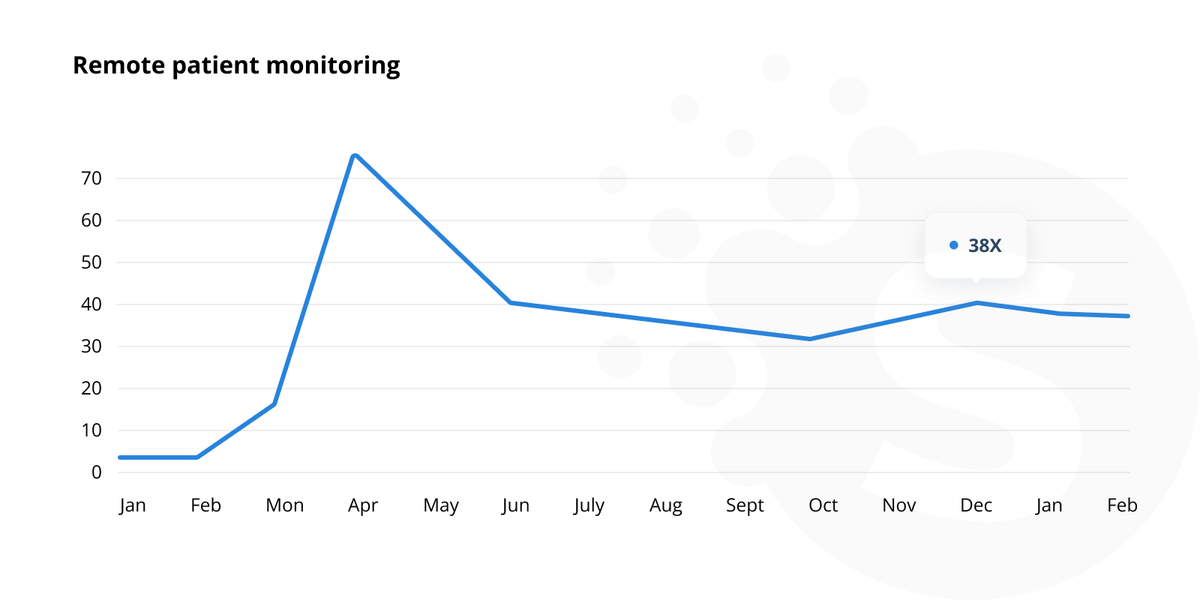
- Telehealth usage stabilized at levels 38 times higher than pre-pandemic, ranging from 13 to 17 percent of visits across all specialties.
- HIPAA Telmed is a web-based telemedicine app offering dashboards, video and audio calls, appointment management, ratings, EHR, and document sharing.
- The team built the video and audio calling feature using the WebRTC video conferencing engine.
- The app was designed to meet HIPAA requirements and also complies with GDPR and HL7.
- Security was implemented using TSL, TDL, and role-based authorization to protect sensitive personal data exchange.
Telemedicine continues to be one of the fastest-growing trends in the aftermath of the COVID-19 pandemic. The pandemic has proved telemedicine to be extremely useful. Reaching its peak during COVID-19 restrictions, it has stabilized at levels 38 times higher than pre-pandemic. After an initial spike to more than 32 percent of office and outpatient visits occurring via telehealth in April 2020, the levels of telehealth usage have largely stabilized, ranging from 13 to 17 percent across all specialties.
The reasons to adopt telemedicine are quite obvious – it’s a cheap, convenient and quick way to connect patients and practitioners. It also allows patients with mobility problems and those from rural areas far from the practitioners to get the medical help they need. According to Deloitte, despite potential glitches and distractions, 30% of patients who attended a virtual medical appointment said they didn’t experience any challenges, which means they are ready to embrace this technology for their everyday use.
The benefits of developing a telemedicine software can be divided into those for patients and for healthcare providers. Main are:
- Accessible healthcare
- Reduced cost of medical services
- Enhanced Efficiency of healthcare
- Better monitoring and prevention of serious illnesses
- Increased data security
- Flexibility for staff
- Accessibility for patients
Thus, the benefits of a telemedicine were pretty obvious even before the pandemic. That’s when our client, HIPAA Telmed, reached us to develop a web-based high quality video conferencing application for remote healthcare and medical advice.
Want a skimmable version?
Get a quick overview of our article with AI to access all the important information quickly.
Generate AI SummaryHide summary
Want a skimmable version?
Get a quick overview of our article with AI to access all the important information quickly.
Generate AI SummaryHide summaryThe development story of HIPAA Telmed — how Softermii built a HIPAA-compliant web telemedicine app, its features and core technology.
Access to medical assistance with no boundaries
HIPAA Telmed is an American telemedicine startup. The web-based app offers an online interaction between physicians and their patients, bringing essential features from everyday apps like document sharing and appointment management into telemedicine software.
The telemedicine app aims to revolutionize doctor-patient relationships and reduce healthcare costs both for patients and hospitals, offering the following features:
Dashboard
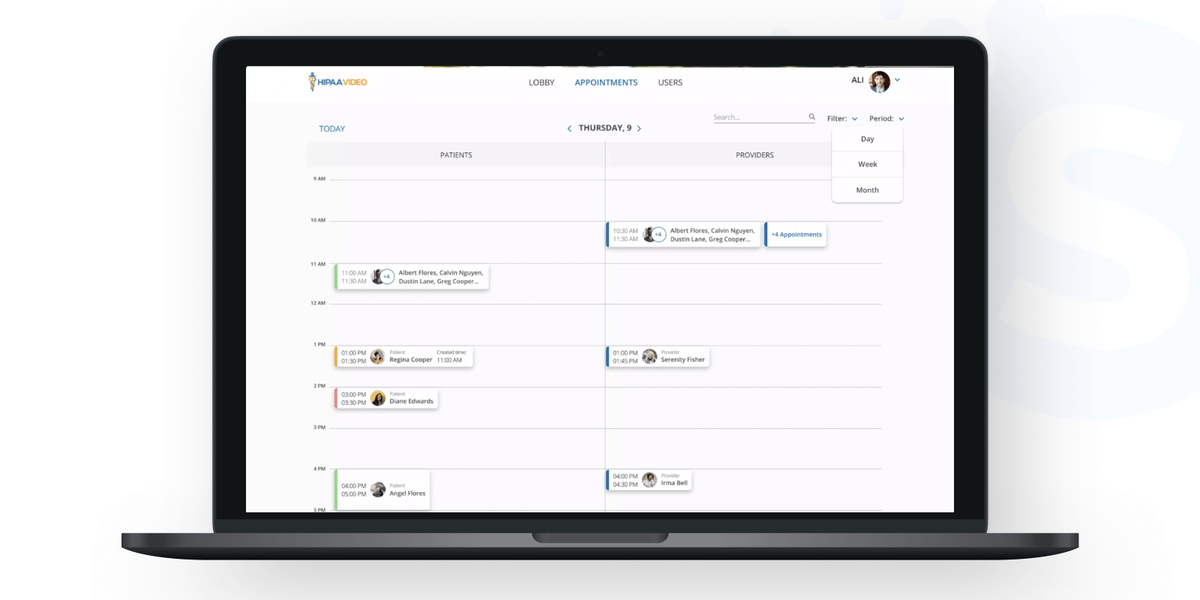
This feature allows patients to set up their personal preferences, location, and the ability to enable syncing with existing hospital records as well as schedule personalized appointments. Doctors can gather critical information prior to the meeting viewing the patient's personal page.
For the practitioner, the dashboard helps to form the schedule, gather needed info, share data, receive notifications, etc.
Video & Audio Calls
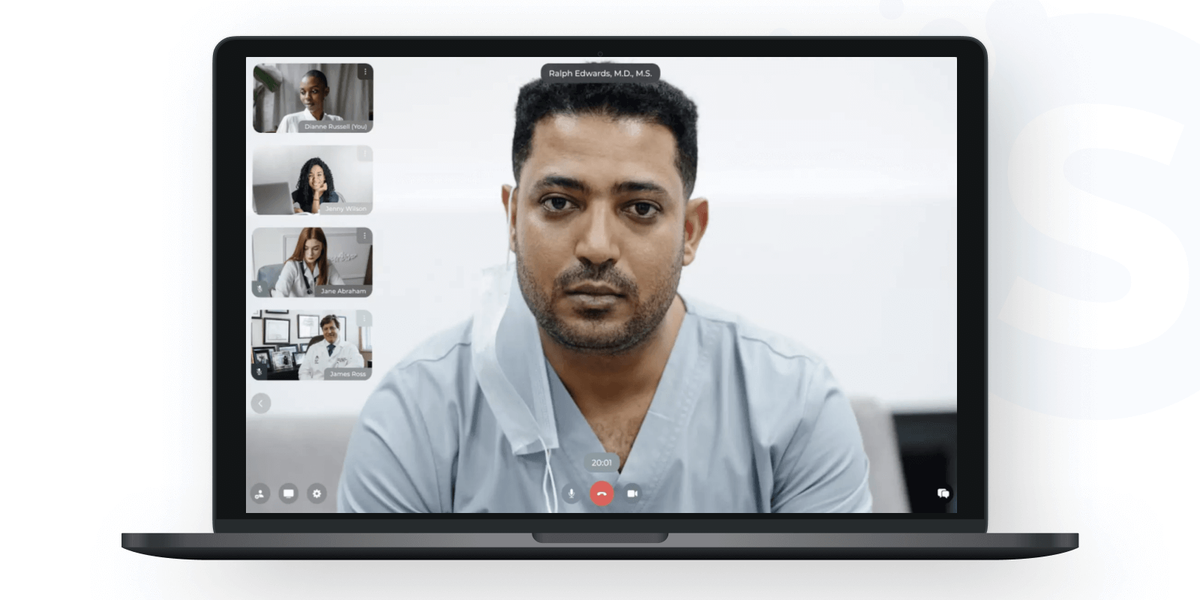
The key feature of most telemedicine products is video chat. Moreover, HQ video and audio are a must — not in the least because doctors use visual cues to determine their diagnosis. To provide the best possible video and audio feature, we’ve used WebRTC video conferencing engine.
Appointment management
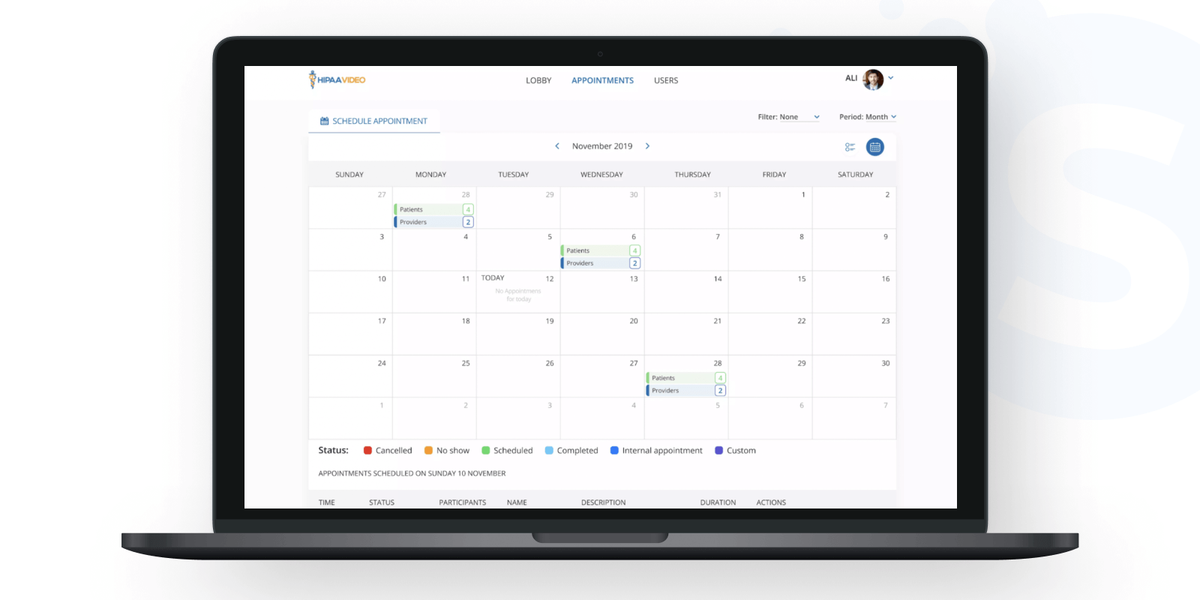
Telemedicine solutions rely on calendars and scheduling features. Thus, we’ve developed a feature that allows patients to be able to see a doctor’s available time slots, their scheduled appointments, and have the option to reschedule their appointments. Once the doctor approves the requested appointment, the patient receives a notification of confirmation.
Ratings
Doctors have to provide their qualifications and credentials, such as education, internships, work experience, and certifications. Their profiles also include ratings and important hospital notifications.
Electronic Health Records
When doctors get notified about an appointment, they should be granted access to the patient’s medical file. This is absolutely necessary in order to provide an accurate consultation and diagnosis. The telemedicine solution can be further enriched with additional features such as the patient’s treatment history, graphs with treatment dynamics, and eRx.
Document and Screen Sharing
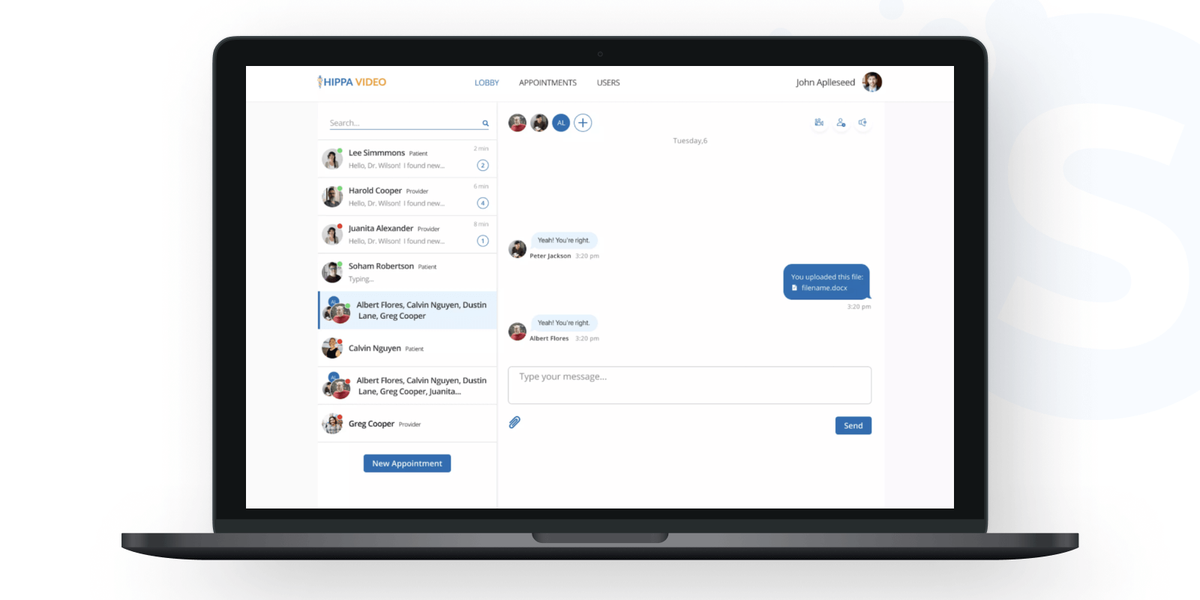
These two features allow doctors to get the full information from the meeting and provide the needed documentation if the patient needs one. The screen sharing feature can help show the results of previously provided examinations, and the document sharing can be anything from EHR and drug prescriptions to invoices.
Payment System Integration
It’s a handy feature making it easier for the healthcare provider and the patient to send invoices right in the app as well as pay them via convenient payment option.
Security and Compliance
Telemedicine software collects sensitive data about patients, which is why their security is critical. Such applications must also comply with regulatory requirements on personal data protection. HIPAA Telmed was initially designed to meet the Health Insurance Portability and Accountability Act and thus be officially allowed in medical practice by hospitals and individual doctors in the US, but also meets GDPR and HL7.
Choose among 120 software specialists
Hire an offshore dedicated team or a few team members for your project. We guarantee 10% of deviation in deadlines and cost.
Hire a teamCore Technology
WebRTC has become the core technology for video and audio calls. By that time, the technology was quite new and lacked documentation. Our team turned it into a decent conferencing solution by improving the technology and customizing it to the client's needs.
As for security, we have implemented TSL, TDL, and Role-based Authorization for login to ensure the sensitive personal data exchange is fully protected. By the release, HIPAA Telmed met all the HIPAA's set of telemedicine app standards as well as GDPR and HL7. The list of the used technologies also included ASP.NET Core, ReactJS, PostgreSQL, Swift and Kotlin.
Access to medical assistance with no boundaries
A web-based high quality video conferencing application for remote healthcare and medical advice.
HIPAA helpOur Team Behind the Project
The project itself has a complicated tech structure. Hence we had a bigger team of developers. They had to adapt the new WebRTC technology to a compelling communication app.
The HIPAA Telmed app also required the implementation of numerous security protocols and set up a protected cloud environment. The latter one was secured by a DevOps specialist who managed to deploy complex cloud infrastructure.
The team of designers developed a simple yet full of features interfaces, both for physicians and patients. We've ensured the app functions seamlessly by involving the QA team, conducting numerous manual and automated tests.
Considerable Achievements
As the platform itself requires a lot of customization and high load testing, we've faced multiple challenges.
Fast development
The app with such a big variety of features requires a team of 15 specialists and 8 months of development. Our team of 8 specialists managed to deliver the outcome in 6 months.
Newest technology stack
We’ve enhanced the communication between users with high quality video conferencing. The implementation of the WebRTC technology made audio and video calling features seamless.
Successful launch
The solution development was dedicated to the clients’ demand to let their customers go digital. Eventually, all the customers appraised the usability and effectiveness of the application.
Final Thoughts
According to one research, primary care doctor visits have declined by 60% since the pandemic began. Video appointments have replaced in-person consultations. They have become an attractive alternative for both patients and doctors. Patients no longer spend hours in waiting rooms and commuting to their doctor’s office or healthcare provider.
According to the Applause survey, 63% of respondents stated they plan to use telehealth more than they did prior to the pandemic. What’s more, over three-fourths (77%) of patients said they enjoyed using telehealth, even though 48% claimed there were things they could not do via the telehealth service that they would like to have done. And only 39% of respondents said they would like to visit doctors in person.
Which just proves that the best time to develop a telemedicine solution was last year. The second best time is now! If you need a customized, secure, HIPAA-compliant telemedicine platform, just drop us a line so we could help. Our software development team has extensive experience building telehealth platforms from the ground up.
The healthcare business is being virtualized on every level from consumer to provider and telemedicine as a whole is experiencing a huge boom right now.
How about to rate this article?
124 ratings • Avg 4.5 / 5 · Thanks for rating!
Written by:

Co-Founder
Andrii Horiachko is a Co-Founder of Softermii with over 12 years of experience in software development, eight of them spent building and managing Softermii itself. He is responsible for technology-innovation in clients’ projects, making sure every product runs on a modern, carefully chosen tech stack that can sustai…