


How to Build a Custom Telemedicine EHR Software: Importance and Core Features

Want to know more? — Subscribe
It's become standard practice for clinicians to use the data and analytics provided by EHR systems to improve patient outcomes and ensure high-quality care.
It's become standard practice for clinicians to use the data and analytics provided by EHR systems to improve patient outcomes and ensure high-quality care. If you compare the pre-pandemic use of telehealth with the current state of things, the shifts are dramatic. For example, in 2019, only 11% of patients used telemedicine. Now, 76% are interested in such a service.
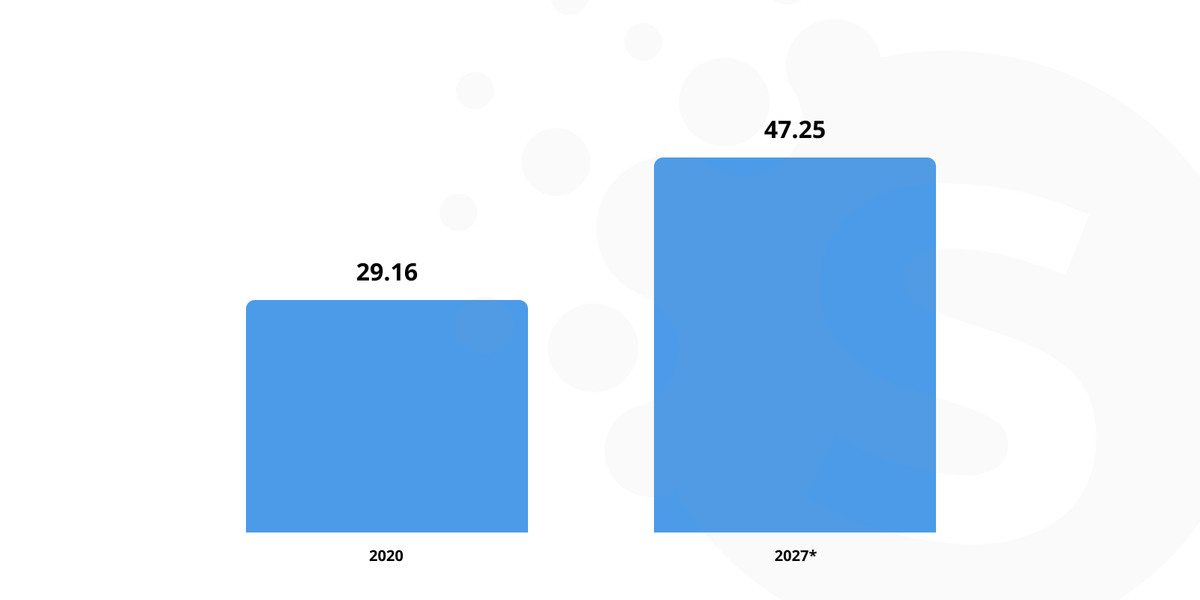
According to Statista, in 2020, the size of the electronic health records (EHR) market worldwide was valued at approximately 29 billion U.S. dollars. By 2027, the market size of EHRs globally is forecasted to reach over 47 billion U.S. dollars. Consequently, healthcare practitioners are seeing the enormous value of telehealth EHR integration.
Clinicians in all areas of medicine can streamline operations and improve patient care when they integrate telehealth into EHR. In this article, we'll look at the importance and examine the must-have features of telemedicine EHR solutions. We'll go over how to integrate telemedicine software features into your existing EHR solution and explore the cost and steps required for creating a telemedicine ehr software.
This guide is built on Softermii’s 8 years of experience building healthcare software such as HIPAA Telmed, My Health Explained, and MedRealtime. Read on to learn more about how to integrate telehealth into EHR or create a stand-alone solution!
Want a skimmable version?
Get a quick overview of our article with AI to access all the important information quickly.
Generate AI SummaryHide summary
Want a skimmable version?
Get a quick overview of our article with AI to access all the important information quickly.
Generate AI SummaryHide summaryHow to build custom telemedicine EHR software — its importance after COVID, problems with existing tools, and core features.
The Importance of Telemedicine EHR Software after COVID
Even before the global pandemic, the healthcare industry had embraced EHR systems and was engaged in a slow but steady shift to telemedicine. As that trend continues, the application of those technologies is becoming a key part of clinic operations, with both telemedicine and EHR taking an important role in the future of healthcare.
The reason for this is simple — both telehealth and EHR result in more efficient operations and better patient care, plus, coupling the technologies makes both more effective.
The function of an EHR system is to collect and store patient health information in a digital format. It has an interface that makes it easy for clinic staff and medical professionals to search and access patient information.
Telemedicine is the provision of remote clinical services, such as diagnosis and monitoring, using telecommunication tools. It includes the electronic distribution of health-related information.
Read Also: Remote Patient Monitoring Software Development
The connection between these two technologies is plain to see, and telemedicine integration opportunities abound. Telemedicine EHR software improves patient-provider communication and simplifies patients' access to healthcare. It also lowers administrative costs for the healthcare providers.
While virtual appointments have been more common during the pandemic as a means of minimizing face-to-case interaction between patients and staff, the adoption of telehealth was well underway before the pandemic and will continue to be one of the predominant ways that healthcare is administered.
What's Wrong With The Existing Telemedicine EHR software?
Inexperienced users may think that there are plenty of EHR software on the market and may be right. However, there’s not so many quality solutions available.
One of the main pain points for practitioners in the existing EHR software is impractical design which makes it difficult and time consuming to work with such products. According to a study conducted by the University of New Mexico, up to 40% of practitioners struggle with medical record keeping. According to specialists, they are now spending two minutes at the computer for every minute spent with patients.
Another major problem with existing EHR software is the complex and feature-packed interface. If you want to build a custom telemedicine ehr software, you have to remember that practitioners are not tech specialists – they need easy-to-use solutions with user-friendly interfaces and the right amount of features.
Also, don’t forget about seamlessly working third-party integrations – not all EHR solutions that are currently on the market offer consistent connection and configuration with other medica software and solutions. l
Choose among 120 software specialists
Hire an offshore dedicated team or a few team members for your project. We guarantee 10% of deviation in deadlines and cost.
Hire a teamTelemedicine EHR Software — The Core Features
When combining the capabilities of EHR with telemedicine in the course of integrated telemedicine solution development, certain core features emerge—features that are not present in either of the two technologies on their own. Here's a list of core features that make telemedicine EHR software greater than the sum of its parts.
Single-point Data Entry
Telemedicine EHR software ensures that providers and staff never enter the same information twice. After a remote consultation, providers create a detailed record of the telehealth visit, and if they employ medical software integration that unites telehealth and EHR, there's only one system in which to enter the data. Information gathered during a telehealth visit is automatically added to the patient’s health record, streamlining data entry, and reducing the chance of errors.
Read Also: How to Make Medical Scheduling Software Like Doctolib
Synchronized Patient Insurance Data
Many insurance companies cover telehealth services, but coverage varies, and it can be difficult to track. A patients’ insurance information must be available to clinicians at the time of the visit. With integrated telemedicine and EHR systems, practitioners and staff can easily verify patient benefits and eligibility.
Improved Workflow
When telemedicine systems and EHR software are integrated, clinicians can streamline operations to create a better experience for administrative staff, for the medical professionals conducting telehealth consultations, and for patients. Due to the centralized data access and unified interface that telemedicine EHR software provides, every operational step, from scheduling to appointment follow-up, occurs with zero friction.
Optimized Patient Care Experience
Providers can conduct audio/video consultations with patients while effortlessly referencing their health records. Doctors can look up a patient's medication allergies and pharmacy data before issuing E-prescriptions. When telehealth and EMR systems are merged, providers get access to the data they need in real-time, creating an efficiency that matches that of a face-to-face office visit.
Patient-focused Reporting
The information that comes from a telehealth consultation must be made available to the patient in an easy-to-understand format that summarizes the diagnosis and explains the practitioner's orders. Fully integrated systems also allow patients to access their medical history.
Access to medical assistance with no boundaries
A web-based high quality video conferencing application for remote healthcare and medical advice.
HIPAA helpSecurity and Compliance
The security of patient data should be a top priority for healthcare providers. Electronic medical records (EMR) have become standard in the healthcare industry and telemedicine EMR integration ensures that the collection, storage, and sharing of data is HIPAA compliant. It also helps organizations meet various standards in healthcare information exchange, like the widely recognized guidelines defined by HL7 and CCHIT.
When a telehealth system is fully integrated with an EHR system, clinicians enjoy the benefits of efficient data entry and access, can provide a better patient experience, and are able to optimize all phases of their practice’s operations. You can find more details about effective telehealth programs in the Health IT playbook created by HealthIT.gov. Next, let's discuss what's involved when integrating EHR with telemedicine systems.
Adding Telemedicine Software Features to Your Existing EHR Software
Telemedicine EHR software is always either EHR software with telehealth features added or it’s designed to be a hybrid system from the beginning. Both are valid approaches, but right now, let's look at what's involved in adding telemedicine capabilities to your existing EHR software.
An EHR system collects patient health information in a digital format. In addition to patients' demographics, medical history, and medication data, electronically sharable records contain information about immunization status, lab results, billing details, etc.
What would integration between telemedicine software and your EHR system look like?
Imagine being able to schedule, prepare for, launch, conduct, and follow-up on virtual visits, all from within the patient's record.
A properly executed telemedicine EHR system that's built upon your current EHR platform will expose all the capabilities of a full-featured video conferencing system and seamlessly integrate them with the features of your EHR system.
Providing virtual care in an EHR system is the best way for practitioners to integrate customer data into the telehealth process and streamline patient care. Administrative staff can check a patient in, a nurse can take over, and finally, the provider will interact with the patient—all steps are handled over video, with all required patient data readily available.
The 3 Most Important Steps in Creating Telehealth EHR Software
Whether you're adding telehealth functionality to your EHR system or you want to develop custom telemedicine EHR software as a hybrid system, there are some steps you'll need to follow. Even when outsourcing such development work, it's important to acknowledge what's involved, so let's take a quick look at the general steps required to create telehealth EHR software.
Steps
Understand Clinic Workflow
Appointment scheduling, confirmation, notification of the physician—that's the first half of a typical telehealth workflow. At the time of the appointment, the provider connects to the system, reviews patient records, conducts the consultation, and delivers the diagnosis and orders. The video session ends.
Read Also: Medical Patient Scheduling Software Development
As common as those workflow elements are, most practices will have additional requirements that call for custom telemedicine EHR software development. Detailing a clinic's workflow is the first and most important step in creating efficient telemedicine EHR software.
[[$banner-blog-link? &banner-text=`In 2019, only 11% of patients used telemedicine. Now, 76% are interested in such a service.`]]
Create an Integrated Telemedicine Mobile App
The audio-video feed that connects doctor and patient should seem like part of the EHR system, and users should be able to access the system via an iOS or Android phone app. The app can be branded to fully represent the healthcare organization, but more importantly, it should be easy for patients to use.
The interface that a patient uses to check medical history or get lab results is the same as that used to create an appointment and take part in the telehealth session because it's all done in the same telehealth app.
From the perspective of clinic staff and physicians, the telemedicine EHR app will provide remote access to patient data, allowing for more flexible operations. It will enable efficient data entry, make patient insurance information available, and ensure data security and regulatory compliance.
Implement Telemedicine Website Access
The cohesive features of a telemedicine EHR app will need to be duplicated on the web. To accommodate patients who do not use a smartphone, your telemedicine EHR software solution must include a web interface that allows patients to see their medical data, request a telehealth appointment, take part in a video consultation, and get follow-up information.
How to Make a Telemedicine EHR System HIPAA Compliant?
Data security is particularly relevant in the healthcare industry. It may be hard to believe, but health facilities account for 30% of all data breaches. How do you prevent such involvement? Ensure HIPAA compliant app development.
HIPAA is one of the main rules to follow when you want to create healthcare software. It contains numerous rules and requirements which may influence software development. To stay on top of Protected Health Information security, you need to follow the latter:
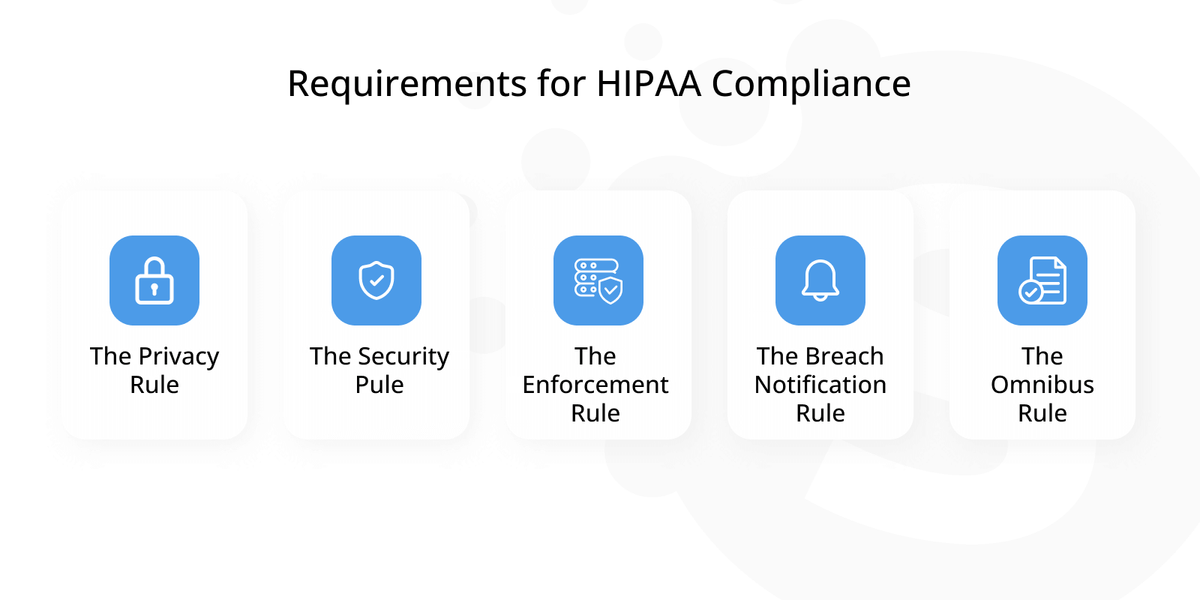
HIPAA Privacy Rule
The Privacy rule restricts the use and disclosure of PHI to minimize the likelihood of data theft or fraud. It also implies that only the patient has complete control over his medical records.
HIPAA Security Rule
This rule implies that healthcare companies must protect any personal information about the patient. This regulation applies to every organization that has access to confidential patient data.
HIPAA Enforcement Rule
The Enforcement rule regulates all penalties that may apply to those responsible for violations related to patient data.
The Breach Notification Rule
This rule implies that you, a software provider, should inform your patients or users about any data breaches within your digital product. You should also immediately report data breaches to organizations like the Department of Health and Human Services. If the data leak affects more than 500 patients, you need to contact the media.
The Omnibus Rule
This regulation is the most recent update to HIPAA, which elaborates on standards not addressed in previous requirements. The Omnibus Rule strengthens the data privacy policy further, extending HIPAA’s obligations for business associates, updating the breach standard, and prohibiting storage, purchase, or sale of data, even those not containing the user’s date of birth.
Secure Authentication
This requirement insists on the implementation of reliable user authentication. However, the HIPAA does not specify which authentication approach you need to implement in your app, so choose from the available options:
- 2FA (two-factor authentication)
- MFA (multi-factor authentication)
- Password-less (for example, FaceID)
Integrity
This requirement implies that your software must follow the technical and administrative measures to ensure data integrity. By integrity, HIPAA means that data cannot be modified or damaged unintentionally. Softermii experts recommend you accomplish this by implementing:
- Authentication
- Digital signature
- Encryption
- Blockchain app architecture
- Device access control
Storage Encryption
Encryption is another requirement for developing a HIPAA compliant app. According to the Act, ePHI must be encrypted both at rest and in transit.
Cost of Building Telehealth EHR Software
Some practices leave their EHR and telehealth systems separate or take advantage of a few minor integration opportunities but otherwise treat the systems as distinct entities. Those providers pay a price in inefficiency every day. The price of integrating your ERM and telehealth systems is favorable.
Healthcare providers who want to save time and money on their telemedicine EHR software can outsource the work to an experienced development company. A seasoned development group with experience in telemedicine and EHR can create a customized solution that meets the needs of any healthcare provider.
According to Statista , by 2027, the market size of EHRs globally is forecasted to reach over 47 billion U.S. dollars.
The development of an EHR software usually consists of several main stages: Stage 1. Discovery phase, estimation & UI/UX design
Time: 280 hours
Cost: $8 400
At this step, business analysts conduct thorough market research. They define your audience and the problems your software will solve. Here, the team also selects features and creates the UI/UX of your product.
Stage 2. Development
Time: 640 hours
Cost: $25 600
At this stage, your developers choose the tech stack for the most profitable implementation of your EHR product. They also take care of data privacy and regulatory compliance and directly develop your software.
Stage 3. Testing & Launch
Time: 240 hours
Cost: $6 480
This step involves making your EHR software perfect. Testers identify bugs and limitations, and developers correct all these errors.
After that, it’s time for your product to be launched on the market.
Stage 4. Writing technical documentation
Time: 40 hours
Cost: $1 600
This step is necessary to create a single document that includes all the information and instructions for your product.
Stage 5. Support
This stage comes to life when your product has already been launched to the market, is up and running. Although, if you want your solution to work seamlessly, be user friendly, accessible and adaptable – a strong support team behind the scenes is what you really need. There will always be what to upgrade as the technical stack behind every successful product does not stand still and is always improving. And so should your integrated telemedicine system.
Let's summarize our considerations in a summary table below.
| # | Stages | Time | Cost |
|---|---|---|---|
| 1 | Estimation, Research & UI/UX design | 280 hours | $8 400 |
| 2 | Development | 640 hours | $25 600 |
| 3 | Testing | 240 hours | $6 480 |
| 4 | Creating technical documentation | 40 hours | $1 600 |
| Total | 1 200 hours (5 month) | $42 080 |
The average cost of the ready-to-use tailor-made EHR solution varies between $40 000 and $80 000. We have not included support as it always depends on the task and may vary greatly. Contact us to get your project's cost precise calculations.
Healthcare Software Solutions from Softermii
The telemedicine EHR solutions that Softermii creates allow providers to schedule and conduct telehealth sessions with their patients efficiently and securely. Through custom development, our talented team will integrate with your existing EHR system, or if necessary, implement one and seamlessly integrate state-of-the-art video conferencing functionality.
Solutions can be based on Softermii's pre-developed VidRTC video conferencing engine. It delivers core functionality for web-based communication across all browsers and devices and has been integral in helping the company develop custom telehealth EHR software.
Softermii is an experienced healthcare software development company that has tackled multiple healthcare-related projects.
There's HIPAA Telmed, for example, a new web-based doctor-patient video-meeting platform that provides a highly functional environment for medical practitioners and their clients to take part in remote consultations. It features a versatile dashboard for client management by clinic staff along with unified record keeping.
This software includes electronic health records and enables quick document exchange. It also offers top-notch audio and video conferencing functionality on our custom VidRTC engine. Here, our specialists have taken care of high-level security and regulatory compliance.
HIPAA Telmed brings patients closer to doctors. Now, people don’t have to leave their homes to get timely medical help or advice.

Softermii has also been deeply entrenched in the world of medical record security and compliance, creating reliable solutions that guard against the unlawful acquisition of users' medical data. One of such examples is MedRealtime.
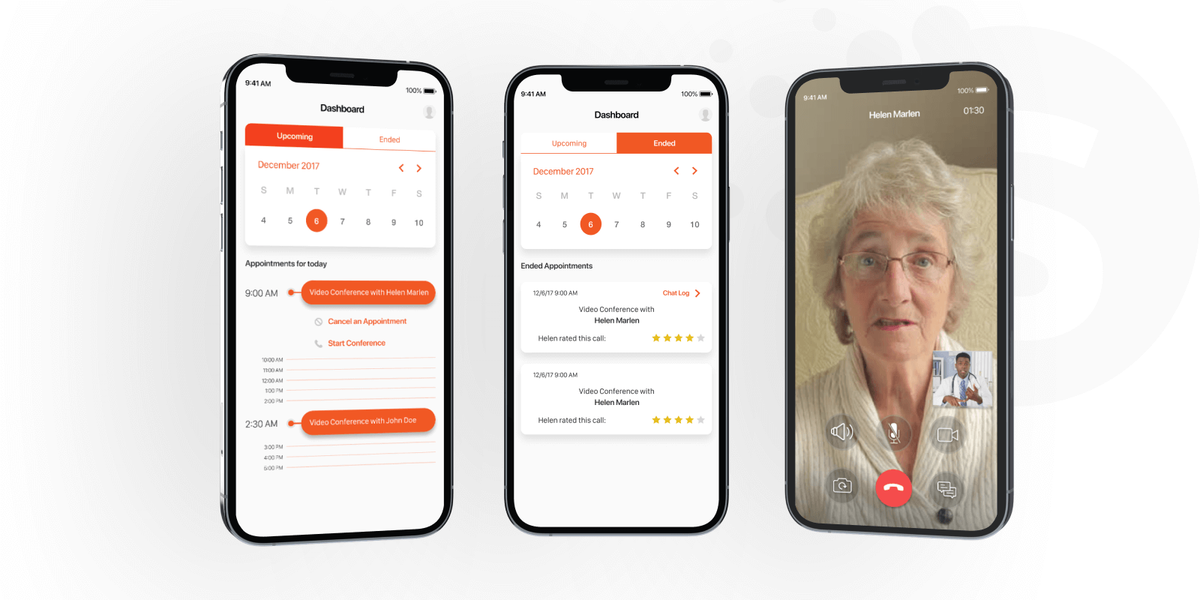
It’s a mobile and web app that helps doctors consult their patients effectively. The platform allows patients to get better access to medicine from anywhere & anytime and have the opportunity to choose the needed specialist based on his experience, skills, and patients' reviews.
Here we have integrated separate profiles for doctors and patients with the possibility of high-quality audio and video conferencing. We have also added file and data sharing functionality so that the healthcare provider can provide precise treatment.
Practice Integrated Telehealth with Telemedicine EHR Software
The pandemic should be ending soon, but many believe that the surge in telemedicine that came with it is here to stay. Clinicians can leverage the power of telemedicine EHR software to enhance their practice, achieving better patient outcomes and ensuring healthcare of the highest quality. For ready access to patient data in a secure but sharable format, telehealth integration is the answer.
Softermii creates custom integrated telehealth solutions that let providers schedule and conduct patient consultations, with sessions supported by access to patient data in real time. Outsourcing the development of your telehealth EHR system to healthcare software veterans like the team at Softermii is the fastest, most cost-effective, and efficient way for clinicians to acquire a world-class telemedicine EHR solution.
We hope this examination of telemedicine EHR software development has been enlightening. We explored the key features of telehealth EHR systems, looked at what's involved when developers integrate telehealth systems with existing EHR software, and briefly examined the cost and steps required to develop telehealth EHR software. Don’t hesitate and reach out to explore how Softermii can create a full-featured telemedicine EHR system for your practice!
The application of technologies is becoming a key part of clinic operations, with both telemedicine and EHR taking an important role in the future of healthcare .
Frequently Asked Questions
What technologies are used in telemedicine EHR software?
Tech stack behind your integrated telemedicine application may vary depending on the features you plan to develop. However, the main average technologies usually contain JavaScript, PHP, Java, Kotlin, Swift, Angular, Node.js, Bootstrap, PostgreSQL, Cloudflare, Microsoft Azure, and other third party integrations such as PayPal, Stripe or Amazon EMR.
Can additional features from the health tech be integrated?
Sure, when you’re creating your telemedicine EHR solutions, you’re not limited to a certain number of features. On the contrary, you may want to add handy features from the healthtech industry to create a seamless experience for your future customers.
What are the legal requirements a telemedicine EHR system must comply with?
When you develop an EMR with telemedicine software from scratch or create a telemedicine ehr integration, you must pay special attention to rules and regulations related to healthcare technologies. These are HIPAA and GDPR compliance. These are security rules that will protect user’s data from breaches.
How much does it cost to create an EHR integrated software?
The average cost of the ready-to-use tailor-made EHR solution varies between $40 000 and $80 000. This cost includes an MVP solution with user-friendly interface, market analysis, strong UI/UX design, development and launch. However, we have not included support as it always depends on the task and may vary greatly. Contact us to get your project's cost precise calculations.
How about to rate this article?
216 ratings • Avg 4.5 / 5 · Thanks for rating!
Written by:

CEO & Co-Founder
Slava Vaniukov is the CEO and Co-Founder of Softermii, with more than 10 years on the front lines of software development. He has spent that decade helping founders and enterprises turn ambitious ideas into products that ship — and that perform. Apps built by his teams have been featured on multiple “Top 10 Best App…